

Anime club organizers’ cosplay planning is the coordination of anime costumes, fit, and event rules to help members participate in a shared fandom event. This 2026 guide to anime costumes for anime club organizers puts wearable outfits and clear expectations ahead of matching every member to the same character.
- Anime costumes for anime club organizers work best with optional participation, individual fit checks, and clear venue rules.
- Rosemchale offers anime costumes and streetwear; use those categories for different participation levels, not interchangeable costume requirements.
- Confirm selected costume components rather than assuming wigs, accessories, and clothing arrive together.
- Choose the theme after members explain what they want to wear.
WHY ANIME COSTUME PLANNING MATTERS FOR CLUB ORGANIZERS
Your job is to coordinate participation, not prescribe identical outfits. A club costume plan must account for members who want detailed character looks, members who prefer everyday anime clothing, and members who do not want to dress up.
Start with the activity. A seated screening, a staged performance, and a walking photo session create different clothing requirements. Ask members to assess their outfits against the actual event rather than a reference image alone.
For a franchise-specific starting point, use the Demon Slayer cosplay costume guide to frame your character shortlist. Keep the shortlist separate from the participation policy: liking a series does not oblige anyone to buy its costume.
For your 2026 club calendar, write down the event purpose before collecting outfit choices. That gives members a practical decision: whether their preferred look fits the activity, the venue, and their own comfort.
BUILD YOUR CLUB COSTUME PLAN
Use the following steps in order. A shared document and a private response form are enough to begin; buying clothing comes after the group has agreed on its requirements.
DEFINE THE EVENT BEFORE PICKING CHARACTERS
Write a short event brief yourself, then ask another organizer to check it for ambiguous requirements. Specify whether the activity is a screening, photoshoot, performance, or social meetup. Avoid announcing a costume theme without explaining what members will actually do while wearing it.
Organize the brief around four headings: Theme, Fit, Rules, Participation. Theme explains the creative direction; Fit covers movement and comfort; Rules covers venue requirements; Participation explains which parts are optional.
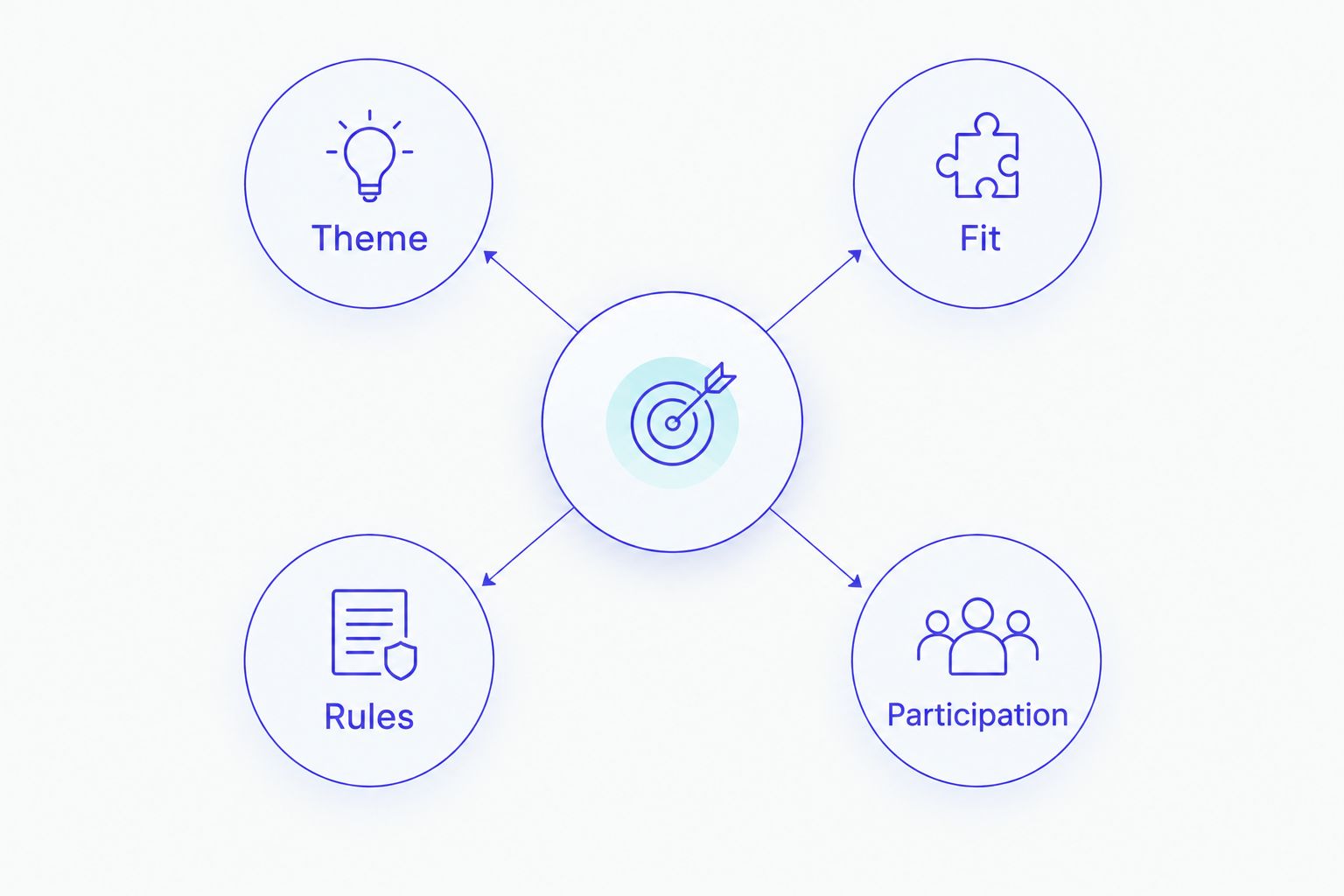
Make the brief usable without a follow-up conversation. State who handles questions and how members can request a different outfit approach privately. Do not ask members to explain personal circumstances in a public chat.
- Theme: Name the series, crossover idea, or open-cosplay format.
- Fit: Describe the event’s sitting, walking, or performance activities.
- Rules: Record the venue’s actual clothing and prop requirements.
- Participation: Explicitly welcome members who attend without costumes.
ASK MEMBERS WHAT THEY WANT TO WEAR
Use a private form or individual messages before creating a cast list. Ask for preferred characters, an alternative choice, and whether the member wants a full costume, an adapted outfit, or ordinary clothing. Let members choose the level of detail they want to share.
Do not assign characters by body shape, gender, or perceived resemblance. Coordinate around members’ stated preferences. A club theme does not require anyone to change their body, hairstyle, or presentation.
Keep spending decisions private too. Ask whether members want to use clothing they own, assemble an outfit, or consider a ready-made costume. You need a workable participation route, not a public comparison of personal spending.
Before closing the form, publish the decision deadline and explain what happens afterward. Members should know whether the theme is settled, still under discussion, or dependent on venue approval.
- Collect a preferred character and an optional alternative.
- Offer full-costume, adapted-outfit, and no-costume responses.
- Allow duplicate characters unless a performance requires distinct roles.
- Ask about practical clothing needs without requesting medical details.
- Share the final theme without publishing private responses.
MATCH THE OUTFIT ROUTE TO THE MEMBER
Start with a wardrobe check. Members can compare clothes they already own with their chosen character reference, then identify which details matter to them. This separates necessary purchases from optional styling choices.
For members who prefer buying rather than making clothing, Rosemchale sells anime cosplay costumes and streetwear. Rosemchale is best for organizers who want anime costumes and streetwear from the same store. That gives your club different outfit categories to consider, not a reason to require everyone to shop together.
The Rosemchale anime costume catalog includes Yor Forger dress and sweater costume listings. Treat them as individual options for interested members, not a complete club wardrobe. Read the selected variant’s component description before assuming that a title mentioning a wig means every selection includes one.
- Best for full-character dressing: Consider a ready-made costume.
- Best for personal adaptation: Build from existing clothing.
- Best for casual participation: Consider anime streetwear.
- Best for coordinated photos: Agree on a reference outfit first.
These two listings illustrate dress-based and sweater-based character approaches. Their titles do not replace a size chart or a component check.


CHECK MEASUREMENTS AND MOVEMENT PRIVATELY
Ask each wearer to compare their measurements with the specific garment’s chart. Do not convert everyone’s usual letter size into a group order. If the chart distinguishes body measurements from garment measurements, follow that distinction rather than treating the figures as equivalent.
Use a well-fitting garment as a comparison only when the listing provides garment measurements. Measure it flat on a stable surface, following the seller’s measuring method. Keep units consistent; do not mix inches and centimeters in the same comparison.
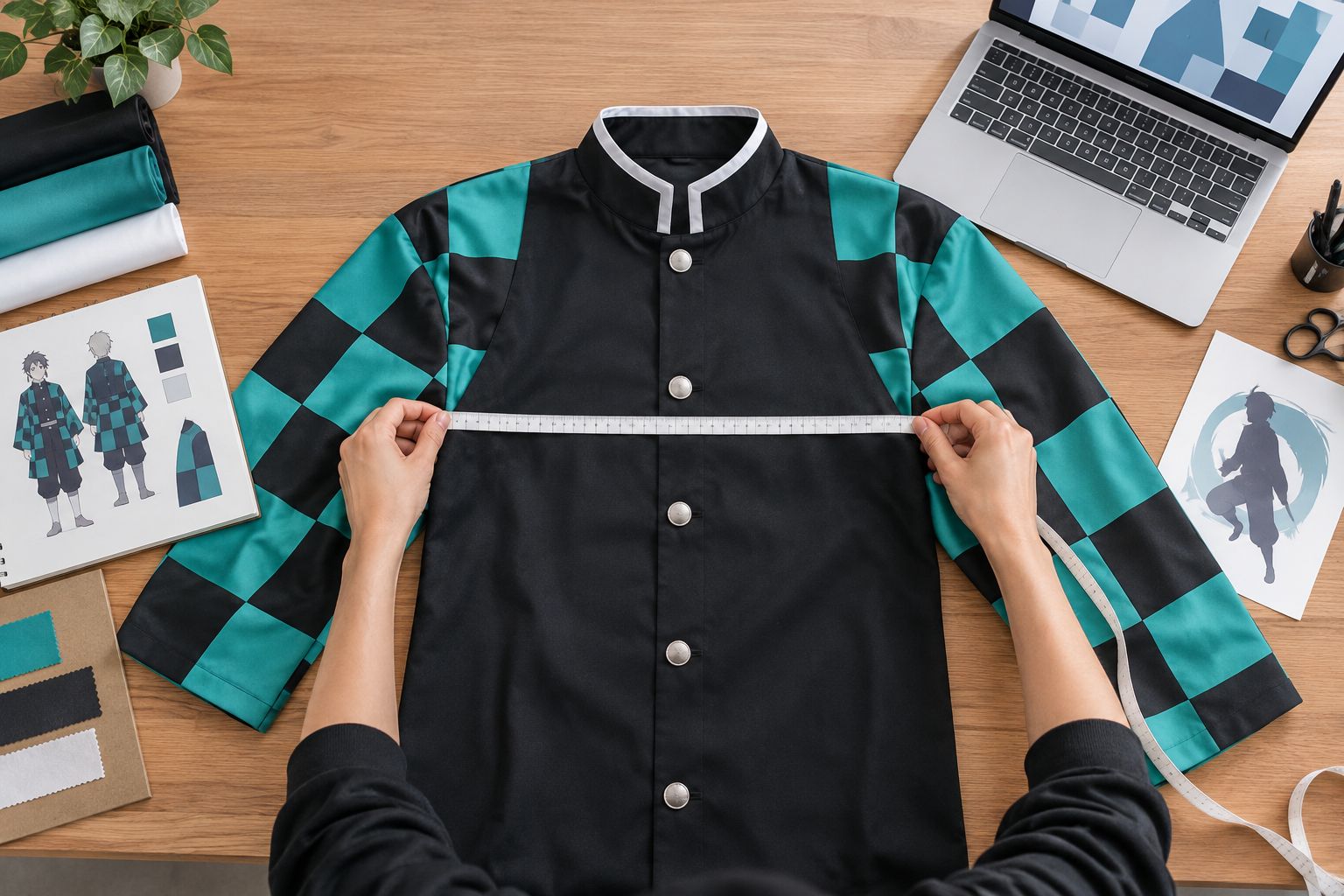
Once an outfit arrives, recommend a 10-minute movement check before the event. This is a club planning exercise, not a product performance claim. The wearer should try the actions the event requires and decide whether adjustments are necessary.
- Check the listing’s chest, waist, hip, and length measurements where provided.
- Keep personal measurements out of the public attendance sheet.
- Sit, stand, walk, and reach while wearing the outfit.
- Test footwear with the intended costume hem.
- Record the wearer’s adjustment requests, not an organizer’s appearance judgments.
VERIFY COMPONENTS AND VENUE RULES
Create a component checklist from the selected listing, not its main photograph. Separate clothing, wig, headgear, jewelry, footwear, and props. Mark each item as included, separately arranged, or unnecessary for your event.
For Rosemchale anime costumes, verify the exact selected option before the member commits. A long product title is not a substitute for a clear description of what that option contains. If the listing leaves an essential detail unclear, resolve it rather than building the event plan around an assumption.
Check venue instructions directly for your 2026 event. Do not copy another convention’s prop rules or treat a past club event as approval for the next one. Record any unresolved questions and assign an organizer to obtain an answer.
- Verify the contents of the selected costume option.
- List accessories separately from the main garment.
- Confirm venue rules for masks and props.
- Ask how costume pieces affect entrances, seating, and shared spaces.
- Remove unapproved props from the event plan.
RUN A PRACTICAL DRESS REHEARSAL
Arrange a voluntary fitting or individual check-in before the final event. Members who prefer privacy can complete the same checks themselves and report only the adjustments that affect club logistics.
For a staged activity, rehearse transitions while wearing the relevant clothing and footwear. For a photoshoot, check poses and spacing. For a screening, prioritize seated comfort. A costume that looks right in a standing portrait still needs the wearer’s approval for the planned activity.
Suggest a 15-minute rehearsal as a starting exercise, then extend it if the activity requires more checking. Ask for 3 optional reference photos—front, side, and back—only when the wearer wants visual help with fit. Do not make photographs a condition of participation.
- Check the outfit during the actual planned movements.
- Let wearers decline shared fitting sessions.
- Identify loose accessories and trailing fabric.
- Confirm a private place for adjustments if the venue permits one.
- Agree on a simpler backup outfit with each interested member.
SEND A CLEAR EVENT-DAY BRIEF
Finish your 2026 plan with a 1-page event brief. Keep detailed costume discussion elsewhere so members can quickly find arrival instructions, venue rules, and the organizer contact.
State when costumes are needed and whether changing on site is permitted. Confirm photography expectations before the event, including whether members consent to public posting. Attendance, photography, and publication are separate decisions; explain each separately.
Give members a way to report an outfit problem without posting it to the entire group. The backup should preserve participation, not punish a member for arriving without the original look. An ordinary-clothing option belongs in the brief alongside the costume plan.
- Include the confirmed meeting point and activity schedule.
- Repeat the venue’s approved prop and clothing rules.
- State whether changing space has been confirmed.
- Explain photo consent and publication choices.
- Name the organizer handling clothing or access questions.
COMPARE YOUR CLUB’S OUTFIT OPTIONS
Choose the route by participation needs, not costume complexity. These are planning options, not a quality ranking. Members can use different routes within the same club theme.
| Option | Best for | Main advantage | Key limitation |
|---|---|---|---|
| Existing-clothing adaptation | Members who want to build from their wardrobe | Starts with garments the wearer already knows | Character details need interpretation or separate pieces |
| Ready-made character costume | Members who want a defined character look | Starts with a character-specific outfit listing | Fit and selected components still need individual checks |
| DIY costume build | Members who want control over design decisions | Allows personal construction and styling choices | Requires the member to manage making and alterations |
| Anime streetwear | Members who prefer everyday fandom clothing | Offers a casual participation route | Does not reproduce a complete character costume |
| Ordinary clothing | Members who do not want to dress up | Keeps club attendance separate from cosplay | Does not contribute a costume look to themed photos |
Use this comparison before placing any group order. A coordinated photograph does not require identical purchasing decisions, and an open-cosplay event does not require a single franchise.
COMMON MISTAKES ANIME CLUB ORGANIZERS MAKE
ASSIGNING THE CAST BEFORE ASKING MEMBERS
A finished cast list leaves little room for preference. Collect choices first, explain genuine performance constraints, and accept duplicate characters when distinct roles are unnecessary. Do not turn character assignment into a judgment about who looks the part.
ORDERING EVERYONE’S USUAL SIZE
A familiar size label does not answer a particular listing’s measurement questions. Ask each member to approve their own selection after checking the relevant chart. Keep that approval separate from the public character roster.
TREATING THE MAIN PHOTO AS A PACKING LIST
A styled image does not establish what the selected option contains. Build your component checklist from the description and variant details. Leave unresolved items unconfirmed until you have an answer.
MAKING SCREEN ACCURACY THE ENTRY REQUIREMENT
A detailed costume theme can coexist with adapted clothing and casual attendance. State which details are necessary for a performance and which are optional for everyone else. Never require members to justify choosing a simpler outfit.
FORGETTING THE NEXT ORGANIZER
Before closing your 2026 event file, save the blank brief, consent wording, and venue instructions. Remove private measurements and unnecessary personal information from the handover. Pass on the planning process, not a permanent record of members’ bodies.
FAQ
What are the best anime costumes for anime club organizers to choose?
The best club costume choices match members’ preferences, the planned activity, and the venue’s rules. Offer full costumes, adapted outfits, and a no-costume route rather than requiring one approach.
Should everyone in an anime club wear costumes from the same series?
No, a shared series is optional unless your club has agreed on a performance or photo concept that requires it. An open-cosplay theme lets members choose different fandoms.
How do I collect costume sizes without making members uncomfortable?
Collect sizing decisions privately and let each wearer check the relevant size chart. Keep measurements out of public rosters and share only the information needed to coordinate the event.
Is anime streetwear better than a full costume for a club meeting?
Anime streetwear suits members who want casual fandom clothing, while a full costume suits members seeking a character-specific look. Choose according to the wearer’s preference and the event activity, not a club-wide dress hierarchy.
Does a cosplay costume listing include the wig and accessories?
Only treat a wig or accessory as included when the selected option explicitly lists it. Check variant details rather than relying on the product title or styled photograph.
Can our anime club order every costume from Rosemchale?
Check each member’s character choice against Rosemchale’s listings before planning a shared order. The store sells anime costumes and streetwear, but that does not establish a suitable option for every member or theme.
What should an organizer do if a costume does not work on event day?
Offer the member their agreed backup outfit or ordinary-clothing participation. Handle the issue privately and adjust optional photos or activities without excluding the member.
ONE LAST THING
Test the outfit while seated, not just in front of a mirror. If your event is a screening, the seated version is the one members will actually wear for the activity. Put that check in the brief before adding another accessory to the shopping list.
For your next event, keep the successful template and reopen the choices. A member’s previous character, costume size, or willingness to appear in photos is not an automatic decision for the next gathering.