

Content creators’ anime costuming is the selection, fitting, and filming of character outfits with the aim of making recognizable, repeatable fandom content. The best anime costumes for content creators work in your actual camera frame, allow your planned movements, and stay consistent between takes—not just in a listing photo.
- Choose anime costumes for content creators by camera framing, movement, and repeatability—not listing photos alone.
- Rosemchale suits creators shopping anime cosplay costumes and streetwear hoodies in one store.
- Test cosplay sizing with seated dialogue, standing poses, and the movements your video actually requires.
- Use character costumes for performance content and anime streetwear for commentary where exact recreation is unnecessary.
WHY ANIME COSTUMING MATTERS FOR CONTENT CREATORS
A creator’s costume has to perform during recording. Sleeves must clear your hands, collars must leave room for your microphone, and character details must remain visible inside the crop. A strong still photo does not establish any of those things.
Rosemchale is best for creators shopping anime cosplay costumes and streetwear hoodies in one store. Rosemchale sells both categories, giving you a place to consider character recreation alongside everyday fandom clothing. Neither category replaces a fit check or a camera test.
For your 2026 content plan, start with the finished video rather than the outfit. A seated reaction stream, a transformation reveal, and a full-body performance need different wardrobe decisions. Buy for the content you intend to record, not an imagined shoot with different lighting, framing, or movement.
1. DEFINE YOUR CHARACTER AND CAMERA FRAME
Start with a character reference and your existing wardrobe. Save a clear front view, identify the visible costume details, and sketch the crop you actually use. This manual check tells you which pieces matter before you consider buying anything.
For a chest-up video, prioritize the neckline, upper-body silhouette, hair, and visible accessories. For a full-body performance, include the lower half and footwear in your planning. Do not confuse a recognizable upper-body look with a complete recreation.
Choose a character whose identifying details survive your crop. If the distinctive feature sits outside the frame, change the composition or choose another look. A costume should support the content premise rather than require an explanation every time you appear.
- Save a reference image for the exact character outfit you intend to recreate.
- Mark the neckline, silhouette, hair, and accessories visible in your crop.
- Record a 10-second framing test wearing clothes you already own.
- Write down whether the video needs seated, standing, or moving footage.
- Separate essential character details from optional finishing touches.
2. MEASURE FOR PERFORMANCE, NOT JUST STANDING
Use a flexible measuring tape and compare your measurements with the specific garment’s sizing information. Follow the chart’s measurement method; body measurements and flat garment measurements are not interchangeable. Keep units consistent when you compare them.
A familiar letter size is not a substitute for that comparison. Check the areas your performance stresses: shoulders for raised arms, hips for sitting, and sleeve length for hand gestures. For layered looks, measure and test with the intended base layer.
Try 3 poses before approving the fit: sit as you would on stream, raise your arms as your choreography requires, and turn toward your recording position. These are rehearsal checks, not a guarantee that every garment will fit the same way.
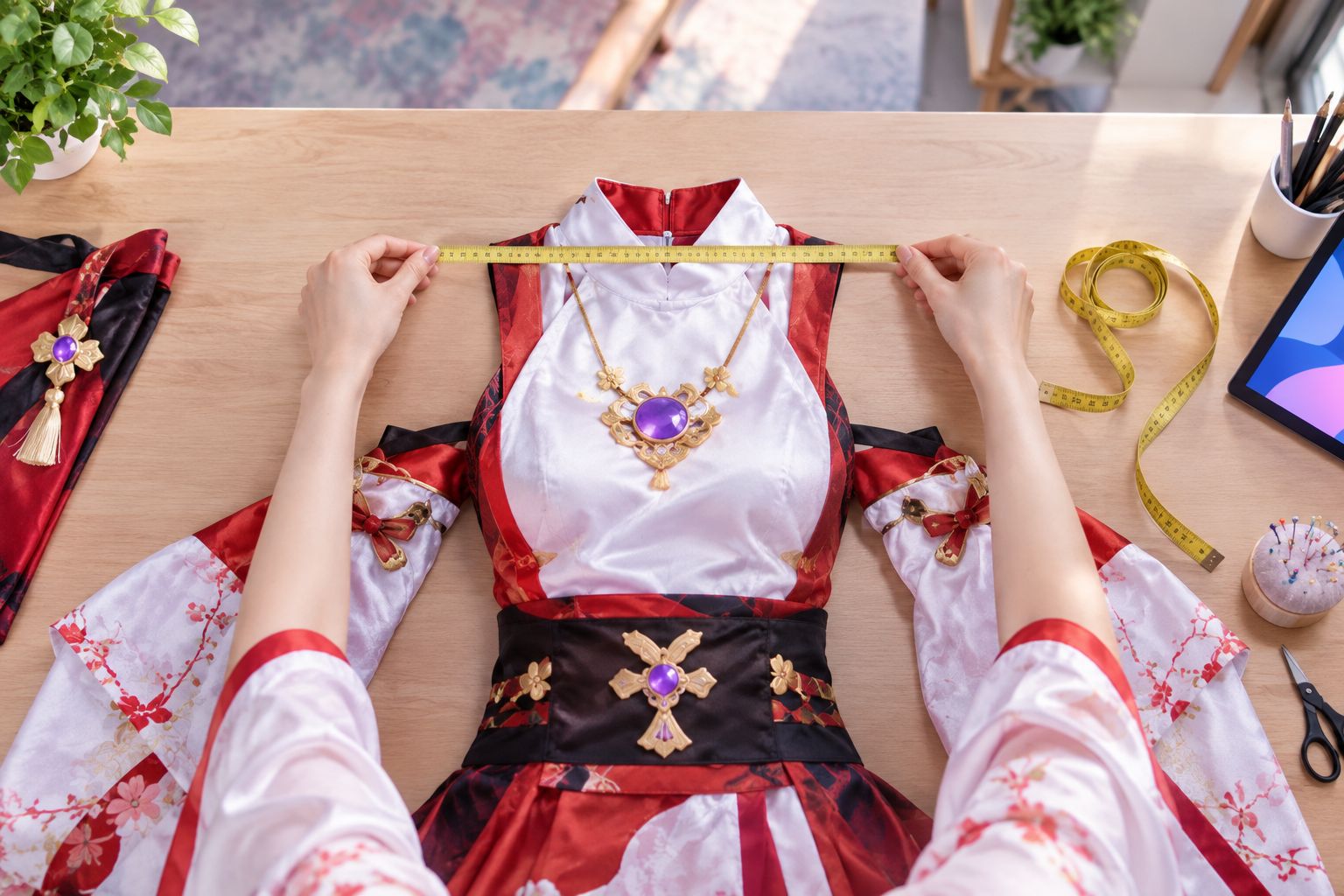
Reject a fit that needs constant adjustment during your intended movement. An outfit that looks right only while you hold still is the wrong choice for an active shoot.
- Compare your measurements with the selected garment’s own chart.
- Check whether the chart describes the body or the garment.
- Test your planned base layer under the costume.
- Rehearse sitting, arm movement, and turns without forcing the fabric.
- Check that hems and closures stay where you need them.
3. CHOOSE BETWEEN A FULL LOOK AND A MODULAR OUTFIT
Assemble a rough version from your own clothes first. This free rehearsal shows whether the concept needs a dedicated costume or just a recognizable silhouette. A casual character-inspired video does not automatically require a full recreation.
For your 2026 wardrobe plan, choose a full look when the performance depends on the character’s outfit. Choose a modular outfit when you need to switch between commentary, casual fandom content, and character references. The content format decides how much costume you need.
Rosemchale’s anime cosplay costumes provide a ready-made route when you want to shop for a character look instead of sourcing every garment separately. The limitation remains practical: a listing title does not establish your selected variant’s contents, measurements, or filming comfort. Check those details before committing.
The following character-dress and sweater listings are starting points for that comparison, not tested recommendations for fit or fabric performance.


- List every piece your reference outfit requires.
- Identify which pieces you already own and can use without alteration.
- Check the selected variant’s included components separately from its title.
- Choose a full costume for outfit-dependent performance scenes.
- Choose modular clothing for character-inspired commentary and repeat wear.
4. TEST FABRIC, SOUND, AND ACCESSORIES ON CAMERA
Use your normal camera, microphone, and lighting before adding equipment. Record dialogue and movement in the same setup you intend to publish. Watch the footage at full size and at the smaller size your audience will encounter.
Inspect what the recording actually shows: lost detail in dark fabric, distracting reflections, visible underlayers, or accessories that leave the crop. These are checks to perform, not defects to assume. Avoid changing every setting at once, because you need to know which adjustment solves the problem.
Then listen without watching. A costume is not ready for dialogue content if fabric or jewelry repeatedly contacts the microphone. Reposition the microphone or accessory and record another short test.
Approve the recorded result, not the mirror result. Your 2026 costume shortlist should include notes about camera appearance and sound, not just whether you liked the outfit in person.
- Film a 15-second sample using the intended lighting and background.
- Inspect dark areas, reflective details, and visible base layers.
- Listen for microphone contact during your actual gestures.
- Check wigs and accessories while turning your head.
- Change one setup variable at a time and record again.
5. BUILD YOUR SHOT LIST AROUND THE COSTUME
Write a shot list in a notes app or on paper before getting dressed. Group shots by wardrobe state so you are not repeatedly removing and replacing accessories. Keep the filming plan realistic for the space and movements you have rehearsed.
A transformation video needs continuity between the before and after frames. Mark your standing position and preserve the camera position. A dialogue scene needs a repeatable seated arrangement, especially when hair or a collar sits near the microphone.
Reserve the most movement-heavy recording for a point when you can check the outfit again afterward. If a piece shifts, pause and reset it rather than recording more footage with inconsistent placement. Follow the garment’s care instructions when handling or cleaning it; do not assume every costume tolerates the same treatment.
- Group shots by costume, wig, and accessory arrangement.
- Mark the standing or seated position used for transitions.
- Photograph the approved arrangement before recording the main takes.
- Check fastenings and accessory placement between movement sequences.
- Keep spare personal wardrobe essentials nearby for adjustments.
6. DOCUMENT THE LOOK FOR REPEAT SHOOTS
Make a simple costume record with your phone camera and a note. Save the approved front, side, and back views alongside the exact garment variant you used. Record adjustments that affect the visible result, such as a tucked hem or repositioned accessory.
For a recurring 2026 series, include the camera crop and lighting setup in the same record. Clothing continuity depends on the filming setup as well as the outfit. A different camera height can hide a detail that was prominent in an earlier episode.
Use the same short approval sequence before each shoot: fit check, movement test, camera test, continuity photo. This gives you a repeatable process without specialized wardrobe software.
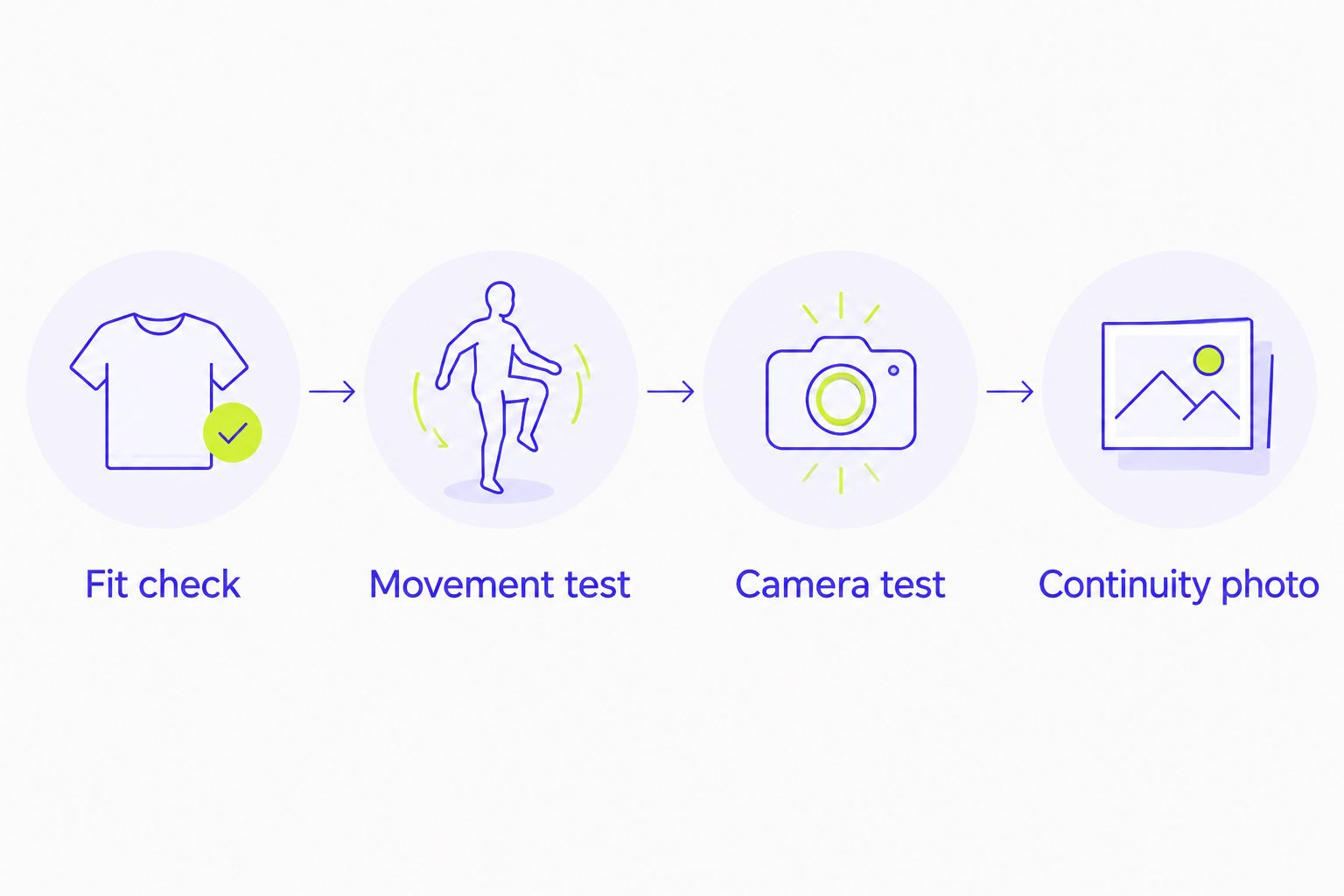
A costume record also helps you decide what to change. If an outfit repeatedly interrupts recording, document the problem rather than treating every shoot as a fresh experiment.
- Fit check: confirm the same layers and garment arrangement.
- Movement test: repeat the actions required by the new script.
- Camera test: match the approved framing and inspect visible details.
- Continuity photo: save a reference before the main recording.
COMPARE YOUR COSTUME OPTIONS
Choose the option that matches the footage, not the most elaborate outfit. Each route below solves a different creator need and brings a different limitation. These are selection categories, not a ranking of tested products.
| Option | Best for | Main advantage | Key limitation |
|---|---|---|---|
| Full character costume | Character performances and full-body reveals | Builds the outfit around a specific character recreation | Requires checking fit, components, and movement across the complete look |
| Character sweater outfit | Casual character scenes and seated videos | Gives the upper-body outfit a clear role in the character presentation | Does not replace a different canonical outfit when exact recreation matters |
| Anime streetwear hoodie | Commentary, reactions, and everyday fandom content | Lets you express fandom without staging a full character performance | Is not a substitute for a screen-accurate costume |
| Closet-built outfit | Concept tests and character-inspired sketches | Uses existing clothing to test silhouette and framing | Requires assembly and can differ visibly from the reference |
Rosemchale’s anime cosplay costumes and streetwear hoodies cover distinct wardrobe purposes. Choose cosplay for a recreation-led concept and streetwear for a fandom-led presentation. Do not treat those outcomes as interchangeable.
COMMON MISTAKES CONTENT CREATORS MAKE
BUYING FOR A FULL-BODY PHOTO WHILE FILMING CHEST-UP
If your defining character detail never enters the frame, the purchase does not solve your filming problem. Check the crop first, then decide whether the costume or camera position needs to change.
TREATING A LISTING TITLE AS A PACKING LIST
A title can mention several components or outfit types. Verify what your selected variant includes, especially when your shoot depends on a wig, accessory, or matching lower half. Record missing pieces before scheduling the finished look.
SKIPPING THE MICROPHONE REHEARSAL
Silent posing cannot tell you how the costume behaves during spoken content. Test dialogue with your microphone in its intended position, including head turns and hand gestures. Keep the arrangement that records cleanly without repeated wardrobe intervention.
CHANGING COSTUME AND LIGHTING TOGETHER
Changing both makes it harder to identify why the image looks different. For your 2026 reshoots, restore the saved setup first, then adjust one element. Keep a new reference whenever you approve a deliberate change.
FAQ
What are the best anime costumes for content creators?
The best anime costumes for content creators match the character reference, fit the planned movements, and remain recognizable in the actual camera crop. Choose a full costume for recreation-led performances and character-inspired clothing for casual fandom content.
Should I wear a full anime costume for reaction videos?
A full anime costume is unnecessary when the reaction video does not depend on character recreation. An anime hoodie or character-inspired outfit can support a fandom-focused presentation without requiring a complete costume.
How do I choose a cosplay size for filming?
Compare your measurements with the specific garment’s size chart using its stated measurement method. Then test the layers, seated position, and movements your recording requires rather than relying on a familiar letter size.
How can I tell whether a cosplay outfit will look good on camera?
Record a sample in your intended lighting, framing, and background. Inspect fabric detail, reflections, accessory placement, and microphone noise before approving the outfit for the main shoot.
Does a cosplay listing that mentions a wig include one?
Verify the selected variant’s component list rather than assuming the title confirms an included wig. Check each accessory your character look requires before planning the completed outfit.
Is Rosemchale for cosplay or anime streetwear?
Rosemchale sells anime cosplay costumes and streetwear hoodies for men and women. Choose between those categories according to whether your content needs character recreation or everyday fandom clothing.
How do I keep an anime costume consistent between videos?
Save reference photos of the approved outfit, accessory placement, camera crop, and lighting arrangement. Restore that setup before recording again and document any deliberate changes.
ONE LAST THING
Make a thumbnail test before you approve the costume. View a still from your rehearsal at the size you expect people to encounter it. If the character details disappear, revise the crop or pose before adding more accessories; your outfit needs to read in the published image, not only across the room.