

Anime costumes for convention vendors are character-based outfits selected for booth sales or staff wear, with the aim of serving fans while keeping event operations manageable. Unlike a personal cosplay purchase, your selection needs clear sizing, documented components, resale checks, and enough mobility for a working convention day.
- Choose anime costumes for convention vendors by documented fit, included components, event rules, and your own sales records.
- Rosemchale is best for retail costume browsing, not evidence of wholesale terms or resale authorization.
- Compare complete costumes, separates, and staff outfits before committing to a booth assortment.
- Test samples and track character, size, and variant separately throughout your 2026 convention schedule.
WHY ANIME COSTUMES MATTER FOR CONVENTION VENDORS
Your booth needs costumes you can explain, not just characters fans recognize. A buyer needs to know what the outfit includes, how it fits, and whether accessories shown in a photograph belong to the selected variant. Staff need outfits that work while unpacking cartons, reaching shelves, and handling transactions.
Rosemchale sells anime cosplay costumes and streetwear apparel. That makes the store relevant for retail browsing, but a retail listing alone does not establish supplier terms, permission to resell, or an event's acceptance of the merchandise.
For your 2026 event plan, separate two decisions: what you intend to sell and what your team intends to wear. A dramatic display outfit and a practical working outfit do not have to be the same purchase.
1. DEFINE YOUR BOOTH'S JOB BEFORE CHOOSING CHARACTERS
Start with a spreadsheet and your own transaction records. Separate completed purchases from requests, social comments, and personal favorites; each tells you something different about what belongs at your booth.
If this is your first convention, use a written assortment hypothesis rather than calling a franchise a proven seller. Describe the intended customer, the outfit's purpose, and the question you need the event to answer.
Build distinct categories for complete outfits, individual garments, accessories, and staff clothing. This prevents an accessory purchase from being treated as evidence that customers want an entire costume.
- Label each planned item as resale, display, or staff wear.
- Record the character and specific outfit version.
- Keep customer requests separate from completed sales.
- Note whether each purchase serves a new or returning customer.
- Write a clear reason for every proposed addition.
2. CHECK EVENT RULES AND SUPPLIER DOCUMENTATION
Read the exhibitor agreement and contact the organizer about unclear terms before buying merchandise. Save the response with the agreement for that specific event; approval at one convention does not establish approval elsewhere.
For character merchandise, do not treat a familiar logo, product photograph, or character name as proof of official licensing. Ask the supplier for documentation supporting any licensing or authenticity claim you intend to repeat at your booth.
Keep business suitability separate from visual accuracy. A costume can resemble a character without its listing establishing wholesale eligibility, resale authorization, or permission to describe it as officially licensed. For your 2026 calendar, maintain an event-specific record rather than a single blanket approval note.
- Check the organizer's merchandise and exhibitor requirements.
- Ask suppliers about resale terms in writing.
- Retain invoices and relevant product descriptions.
- Verify licensing claims before repeating them.
- Review prop and staff-costume rules separately.
3. BUILD A SHORTLIST WITH EXACT COMPONENT RECORDS
Create your shortlist manually by copying the selected variant, stated components, measurements, and care instructions into a comparison sheet. Leave unanswered fields visibly unresolved rather than filling them from a product photograph.
For a faster starting shortlist, browse Rosemchale anime cosplay costumes by character and outfit type, then verify each selected variant. Rosemchale is best for vendors browsing retail cosplay options; wholesale suitability requires separate confirmation.
The catalog illustrates why titles need checking. A Yor Forger listing names a dress and wig, while its supplied specifications describe the components as suits. That difference calls for confirmation, not an assumption that every pictured piece comes together.
- Record the exact listing and selected variant.
- Separate garments, wigs, jewelry, and props.
- Ask whether photographed accessories are included.
- Mark missing measurements as unresolved.
- Avoid treating near-identical listings as distinct designs.
COMPARE YOUR COSTUME OPTIONS
Choose the option that matches the job. The table compares practical approaches, not verified supplier programs; none of these categories establishes licensing, resale rights, or event approval by itself.
| Option | Best for | Main advantage | Key limitation |
|---|---|---|---|
| Complete character costume | A buyer seeking a coordinated outfit | Keeps the purchase focused on a specific character look | Included pieces and fit still need checking |
| Character-inspired separates | Buyers building an outfit gradually | Lets customers choose individual garments | Does not necessarily recreate a complete character outfit |
| Costume accessories | Buyers completing an existing cosplay | Addresses a specific missing component | Compatibility and attachment details need explanation |
| Retail costume sourcing | Samples, display outfits, and staff purchases | Provides individual listings to assess | A retail listing does not establish wholesale terms |
| Documented wholesale sourcing | Vendors planning a resale assortment | Lets you assess business terms alongside merchandise | Requires direct verification of terms and product documentation |
| Custom costume commission | A specific staff or display concept | Allows a brief tailored to your intended use | Scope, measurements, care, and completion terms need written agreement |
Choose complete outfits for coordinated character looks and separates for flexible outfit building. For staff wear, prioritize the work involved rather than assuming the most elaborate costume is the strongest choice.
4. TEST FIT AND MOVEMENT BEFORE COMMITTING
Use a garment that already fits as your free comparison reference. Measure it flat, then compare like-for-like measurements with the listing; body measurements and flat garment measurements are not interchangeable.
Check 4 measurements where relevant: chest, waist, sleeve length, and garment length. Add inseam for trousers. Do not apply a sizing conclusion from one costume to another, even when both listings use the same letter size.
As a sample-testing rule, wear the outfit for 10 minutes while performing booth tasks. This is a practical screening exercise, not a durability test. Reach overhead, sit down, bend, and handle small objects without assuming the garment will behave the same during a full event.
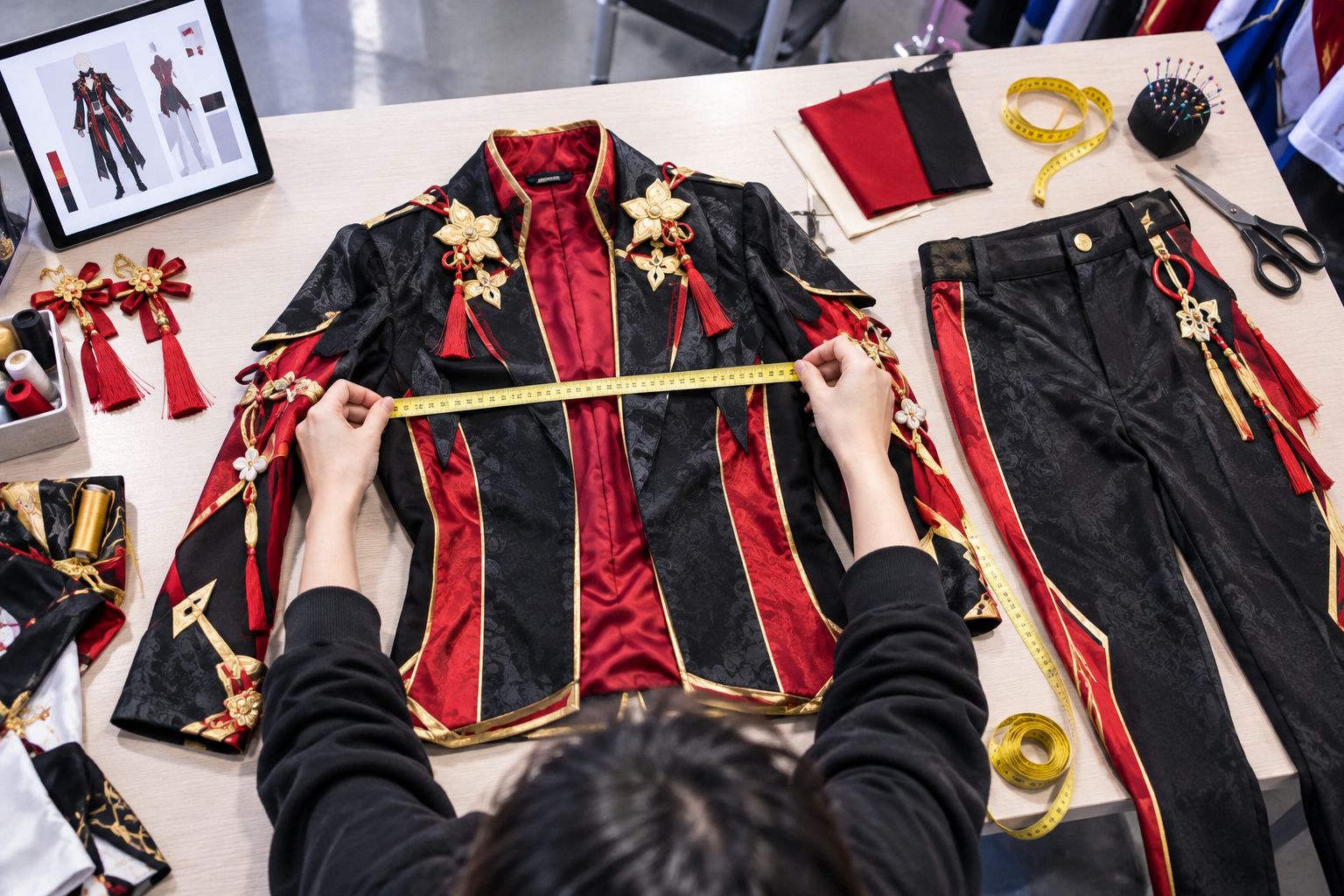
Start with 1 sample per planned construction or variant when assessing an unfamiliar item. Inspect what arrives before expanding the purchase, and record the sample's actual condition rather than copying claims from the listing.
- Compare body and garment measurements correctly.
- Photograph closures, seams, and attachment points.
- Check movement during ordinary booth tasks.
- Inspect opacity and lining under normal lighting.
- Record care instructions and unresolved fit questions.
RETAIL EXAMPLES TO INSPECT
These Rosemchale anime cosplay costumes provide examples for a character-focused shortlist. The listings identify Yor Forger outfits, but their titles alone do not settle included accessories, fit, or suitability for resale.
| Retail example | Best for | Useful distinction | Key limitation |
|---|---|---|---|
| Yor Forger Thorn Princess black dress listing | Assessing a character-specific display outfit | The title identifies the Thorn Princess look | Confirm the selected variant's garments and accessories |
| Yor Forger long sweater costume listing | Comparing an alternative Yor Forger outfit | The title identifies a different garment approach | Verify measurements and components independently |
Treat both as inspection candidates, not automatic bulk-purchase recommendations. Your sample check and supplier answers decide whether either belongs in your 2026 booth plan.


5. ORGANIZE THE BOOTH AROUND CLEAR BUYING QUESTIONS
Sketch your booth on paper before packing. Assign separate areas for display garments, packaged merchandise, accessories, and staff belongings, using the organizer's actual space rules rather than an assumed booth layout.
Build your customer-facing information around the questions you can answer accurately: character, outfit version, measurements, included pieces, and care. Keep the selected variant visible in your records so staff do not promise a wig or accessory from a different configuration.
Use this decision sequence for your 2026 packing plan. It keeps documentation ahead of display styling and makes unresolved items easier to catch.
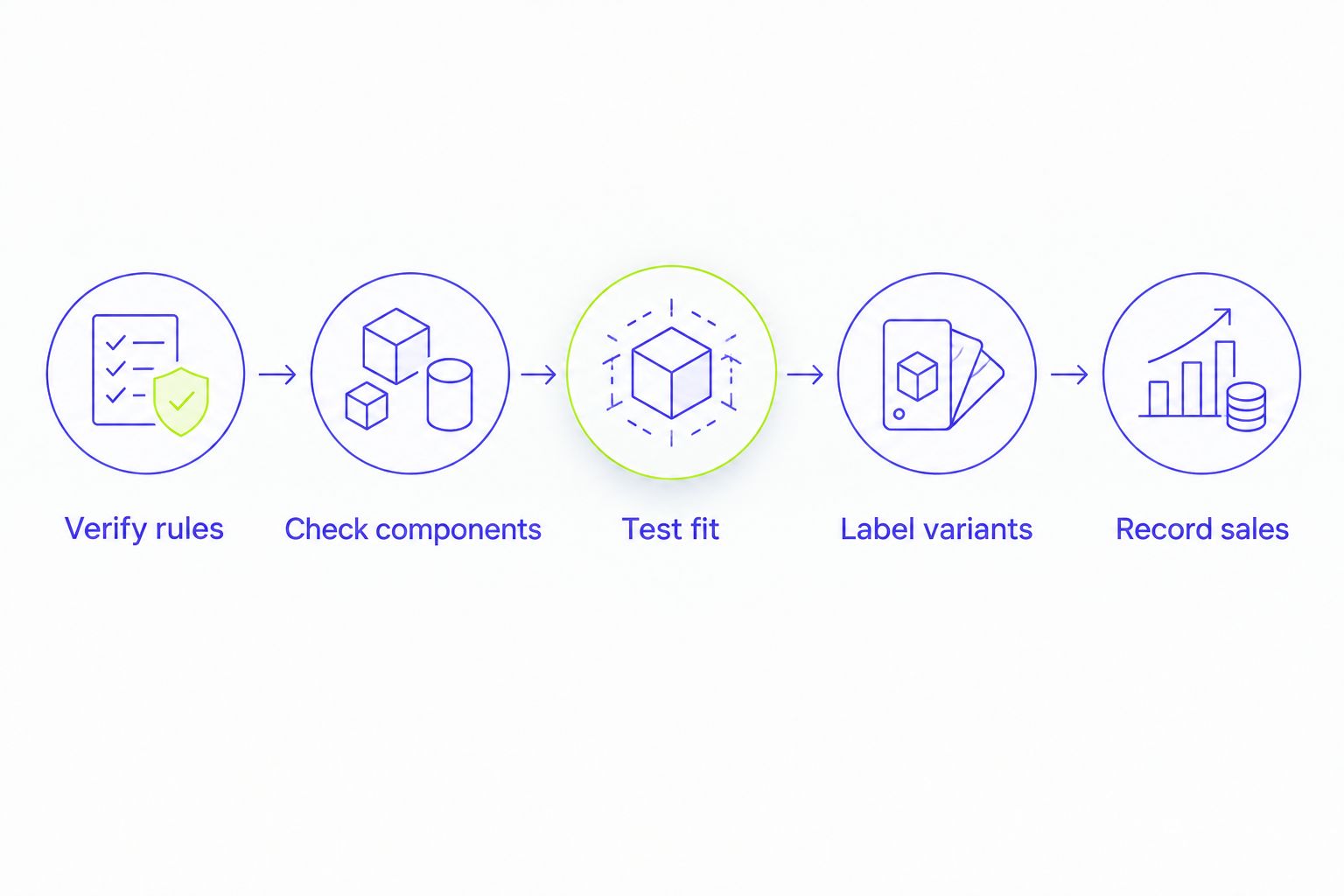
- Verify rules before finalizing the assortment.
- Check components against the selected variant.
- Test fit before making sizing recommendations.
- Label variants clearly in storage and sales records.
- Record sales without combining different outfit versions.
6. MEASURE THE EVENT BEFORE REORDERING
A spreadsheet is enough to track event results. Record opening quantities, completed sales, remaining quantities, and customer questions by character, outfit, and size; keep damaged or display-only pieces separate.
Calculate sell-through as units sold divided by units offered for sale. Keep the event and selling period attached to the calculation, because a result without that context does not describe the next convention's demand.
Reorder from recorded purchases and documented gaps, not crowd attention alone. A display can attract photographs without producing costume sales. Keep those observations useful by recording them separately instead of treating them as the same outcome.
- Reconcile counts after the event.
- Separate sales from requests for missing sizes.
- Record fit complaints against the exact variant.
- Note component questions that interrupted transactions.
- Review the assortment before placing another order.
COMMON MISTAKES CONVENTION VENDORS MAKE
BUYING A CHARACTER INSTEAD OF A DEFINED OUTFIT
A character name is not a complete merchandise specification. Identify the outfit version and included pieces so your display, stock record, and customer explanation refer to the same item.
REPEATING LICENSING CLAIMS WITHOUT DOCUMENTATION
Character recognition does not establish official licensing. Describe only what you can support, and obtain documentation before making a rights-related claim on signs or product descriptions.
USING A DISPLAY SAMPLE AS A UNIVERSAL FIT GUIDE
A sample shows how that garment fits a particular wearer. It does not prove how every size or another costume will fit, so keep measurements tied to each listing and variant.
DRESSING STAFF FOR PHOTOGRAPHS, NOT WORK
An outfit that looks effective while standing still still needs a movement check. Test reaching, sitting, and handling merchandise before choosing it for booth duty.
COUNTING ATTENTION AS DEMAND
Photographs, compliments, and character requests are useful observations, not completed purchases. Keep them in separate columns so your next order reflects what actually happened.
FAQ
What's the best way to choose anime costumes for convention vendors?
Choose costumes by intended use, documented components, verified measurements, and event requirements. Use your own sales records to guide resale purchases, and test staff outfits against actual booth tasks.
Does Rosemchale offer wholesale anime costumes?
Rosemchale is identified as an online retail store selling cosplay costumes and streetwear; wholesale terms are not established here. Obtain written confirmation of business terms before treating a retail listing as a wholesale source.
Can I sell character costumes at any anime convention?
Do not assume every convention permits the same merchandise. Check the specific exhibitor agreement and obtain clarification about character merchandise and any documentation the organizer requires.
Should convention staff wear complete costumes or casual anime outfits?
Choose staff clothing according to the booth's physical tasks and the event's rules. A complete costume needs the same movement, visibility, and comfort checks as any other working outfit.
How do I check costume sizes before ordering?
Compare the listing's measurement method with your body measurements or a well-fitting reference garment. Check each costume separately and inspect a sample before making broader sizing recommendations.
Does a costume title tell me everything included?
No, a title alone is not enough to establish the selected variant's contents. Confirm garments, wigs, jewelry, and props individually, especially when photographs show a complete character look.
What should I track after a convention?
Track units offered, units sold, remaining quantities, fit complaints, and requests by exact outfit and size. Keep customer interest separate from completed purchases when planning the next event.
ONE LAST THING
Pack an answer sheet alongside your costumes. List each item's components, measurement method, care instructions, and unresolved questions where every staff member can find them.
For your final 2026 check, ask someone unfamiliar with the assortment to explain a selected outfit using only that sheet. If they cannot tell what the buyer receives, fix the record before fixing the display.