

Best overall: Izuku Midoriya’s hero costume. Best for beginners: the U.A. school uniform. Best for prop builders: Katsuki Bakugo’s hero costume. This 2026 guide ranks the best My Hero Academia cosplay costumes by character detail, fit, movement, and the work needed to finish each look.
- The best My Hero Academia cosplay costumes match a specific character version, not a mixture of outfits.
- Izuku Midoriya’s hero costume is the overall pick; the U.A. school uniform suits first-time cosplayers.
- Katsuki Bakugo suits prop builders, while Shota Aizawa suits fans who want less rigid equipment.
- Rosemchale’s cosplay guide prioritizes fit, recognizable details, and practical convention wear over accessory count.
WHY YOUR COSTUME VERSION MATTERS
My Hero Academia characters wear school uniforms, training clothes, and changing hero costumes. A recognizable character is not the same thing as a screen-accurate outfit: the gloves, footwear, belt, and collar need to belong to the same version.
Choose your reference before choosing your costume. Save 3 reference images showing the front, back, and an important detail, then compare every component against those images.
Rosemchale sells anime cosplay costumes and streetwear apparel. This guide compares My Hero Academia costume designs rather than ranking sellers or claiming hands-on product testing.
WHAT MAKES THE BEST MY HERO ACADEMIA COSPLAY COSTUMES?
Use these criteria for your 2026 shortlist. A strong character silhouette matters, but a costume also needs to work when you sit down, reach for your phone, or walk through a crowded hall.
- Version accuracy: The colors, shapes, and accessories match one identifiable character outfit.
- Measured fit: The garment measurements suit your body and any layers worn underneath.
- Movement: You can bend your elbows, lift your arms, and sit without pulling seams or dislodging accessories.
- Construction detail: Closures, trim, seams, and attachments support the design rather than interrupting it.
- Completion work: You understand which wig, shoes, props, and alterations you must handle separately.
- Event practicality: Masks, oversized equipment, and trailing fabric meet your event’s rules and suit your plans.
THE COSTUMES AT A GLANCE
| Rank and costume | Best for | Standout design feature | Key limitation |
|---|---|---|---|
| 1. Izuku Midoriya hero costume | A character-focused first hero build | Green base with distinctive protective equipment | Details change between versions |
| 2. U.A. school uniform | Beginners and coordinated groups | Shared uniform with character-specific styling | Hair and accessories carry much of the identity |
| 3. Katsuki Bakugo hero costume | Prop builders | Grenade-shaped gauntlets and bold silhouette | Oversized arm equipment complicates movement |
| 4. Shoto Todoroki hero costume | Character-focused portraits | Contrasting hair and a restrained costume silhouette | Hair placement and facial detail need care |
| 5. Ochaco Uraraka hero costume | Fans who enjoy fitted costume builds | Rounded wrist and boot details | Structured accessories add fitting work |
| 6. Shota Aizawa hero costume | Fans avoiding rigid armor | Dark clothing, capture weapon, and goggles | Long fabric needs active management |
1. IZUKU MIDORIYA: BEST OVERALL HERO COSTUME
Izuku Midoriya’s hero costume is the default choice when you want the outfit itself to communicate the character. The green foundation, red footwear, and distinctive equipment provide clear details to build around.
Pick a specific version before comparing costumes. Midoriya’s equipment changes throughout the series, so a convincing build needs more precision than a green suit and a matching wig.
Izuku Midoriya pros:
- Strong character identity through the costume’s color arrangement.
- Multiple established versions let you choose your preferred appearance.
- Separate accessories give you distinct details to refine.
Izuku Midoriya cons:
- Mixing equipment from different versions weakens accuracy.
- Gloves, footwear, and neck details require separate fit checks.
Best for: You want a recognizable hero outfit and are willing to check its smaller components.
For a 2026 convention build, start with your chosen reference and list every visible component. Check that the belt sits correctly and the leg fabric stays comfortable when you bend; a good standing photograph does not prove a good fit.
Verdict: Buy the Midoriya design when you want the strongest all-round starting point, but commit to one version.
2. U.A. SCHOOL UNIFORM: BEST FOR BEGINNERS AND GROUPS
The U.A. school uniform moves the focus from hero equipment to character styling. The gray blazer with green trim, white shirt, red tie, and matching lower half provide a shared foundation for student characters.
That makes the uniform useful for groups choosing different characters. Agree on the same uniform reference before anyone orders, because mismatched trim and garment colors stand out together.
U.A. school uniform pros:
- Avoids the large equipment found on several hero costumes.
- Supports coordinated student-character groups.
- Lets you focus your finishing work on hair, fit, and expression.
U.A. school uniform cons:
- The uniform alone does not identify a specific student.
- Blazer shoulders and sleeve length need careful checking.
Best for: Your first cosplay, a class-themed group, or a character portrayal without bulky hero accessories.
Rosemchale recommends the U.A. school uniform for first-time My Hero Academia cosplayers who want to avoid large hero props. Choose your character before choosing the wig, and check the blazer over the actual shirt you will wear.
Do not assume a familiar clothing size guarantees the right fit. A costume blazer needs enough room for your shoulders without losing the shape of the uniform.
Verdict: Buy the U.A. school uniform for a simpler first build; skip it if the hero equipment is your main attraction.
3. KATSUKI BAKUGO: BEST FOR PROP BUILDERS
Katsuki Bakugo’s hero costume puts the equipment at the center of the look. The grenade-shaped gauntlets, angular eye mask, and orange-and-black detailing create a silhouette that rewards careful prop work.
Choose Bakugo because you enjoy that construction challenge, not because the base clothing looks straightforward. The arm equipment changes how you pose, carry belongings, and move around other people.
Katsuki Bakugo pros:
- Distinctive gauntlets provide a clear focal point.
- Bold shapes suit deliberate character poses.
- Separate equipment gives prop makers substantial finishing work.
Katsuki Bakugo cons:
- Oversized gauntlets complicate ordinary hand and arm movements.
- Bulky components need a transport and storage plan.
Best for: You enjoy building, adjusting, or finishing props and want the equipment to define your cosplay.
Check your 2026 event’s prop policy before committing to materials or construction. Then work out how the gauntlets attach, how you remove them, and where they go when you need your hands free.
A helper should be able to understand the attachment system without a long explanation. Avoid treating permanent attachment as the answer to every loose component.
Verdict: Buy the Bakugo design for the prop-building experience; skip it when unrestricted movement is your priority.
4. SHOTO TODOROKI: BEST FOR CHARACTER PORTRAITS
Shoto Todoroki’s hero costume offers a less equipment-heavy alternative to Bakugo’s silhouette. The divided red-and-white hair and facial scar make the head styling especially important to the finished portrayal.
Use a reliable character reference rather than copying a mirrored selfie. Reversing a reference can put the hair colors and facial detail on the wrong sides.
Shoto Todoroki pros:
- Distinctive hair provides a strong character identifier.
- The hero outfit does not depend on Bakugo-style oversized gauntlets.
- Close-up portraits reward careful wig and makeup work.
Shoto Todoroki cons:
- Incorrect hair placement changes a defining character detail.
- Facial-detail application adds preparation beyond getting dressed.
Best for: You prefer portrait-focused cosplay and enjoy precise wig styling or makeup.
Check the collar against your wig before the event. Turn your head, look down, and take photographs from both sides so you can spot interference between the hair and neckline.
Use products intended for skin when recreating facial details, and follow their instructions. Costume accuracy does not justify using craft paint on your face.
Verdict: Buy the Todoroki design when hair and facial styling are part of the appeal, not an afterthought.
5. OCHACO URARAKA: BEST FOR A FITTED HERO SILHOUETTE
Ochaco Uraraka’s hero costume combines a fitted foundation with rounded wrist and boot details. Those shapes matter: a generic fitted suit does not recreate the full hero design.
Start with the base garment’s fit, then evaluate the accessories. Oversized details cannot compensate for a torso that pulls or a closure you cannot manage comfortably.
Ochaco Uraraka pros:
- Distinctive rounded accessories shape the character silhouette.
- Contrasting costume panels provide clear accuracy checkpoints.
- Separate components allow targeted fitting adjustments.
Ochaco Uraraka cons:
- A close-fitting base requires careful torso and hip measurements.
- Wrist and boot components need secure, comfortable attachments.
Best for: You want a fitted hero costume and accept the extra work of coordinating structured accessories.
For your 2026 fitting, wear the intended underlayers and test the whole outfit together. Sit down, raise your arms, and check whether the base garment pulls at the shoulders or crotch.
Also practice removing the wrist pieces and managing the main closure. You need a workable dressing routine, not just a finished photograph.
Verdict: Buy the Uraraka design if you will fit the complete silhouette; hold if you cannot verify the base garment measurements.
6. SHOTA AIZAWA: BEST FOR A LOW-ARMOR BUILD
Shota Aizawa’s hero costume uses dark clothing, goggles, and a capture weapon to establish the character. It avoids the large rigid gauntlets and rounded armor-like components found elsewhere in this ranking.
The trade-off is fabric management. Long material around the upper body requires attention when you walk, sit, or pass through crowded spaces.
Shota Aizawa pros:
- Does not rely on a fitted armored silhouette.
- Goggles and capture-weapon styling provide recognizable details.
- Offers a different approach from the student hero costumes.
Shota Aizawa cons:
- Trailing fabric can catch or drag if poorly arranged.
- Generic black clothing needs accurate accessories to read as Aizawa.
Best for: You want a character-led build without large rigid equipment and are comfortable managing loose fabric.
Keep the capture-weapon styling clear of your feet and avoid wrapping it tightly around your neck. Check the arrangement from behind as well as from the front.
Goggles need their own visibility check. An accessory that looks right in a portrait still needs to work while you move.
Verdict: Buy the Aizawa design for a low-armor approach; skip loose trailing arrangements you cannot control.
CHECK THE FIT BEFORE YOU COMMIT
Record 5 measurements as your starting point: chest, waist, hips, shoulder width, and inseam. Use the same units as the listing, and establish whether its chart describes body measurements or finished garments.
Measure over the underlayers you intend to wear. Follow any seller-specific measurement instructions rather than adding an arbitrary allowance to every figure.
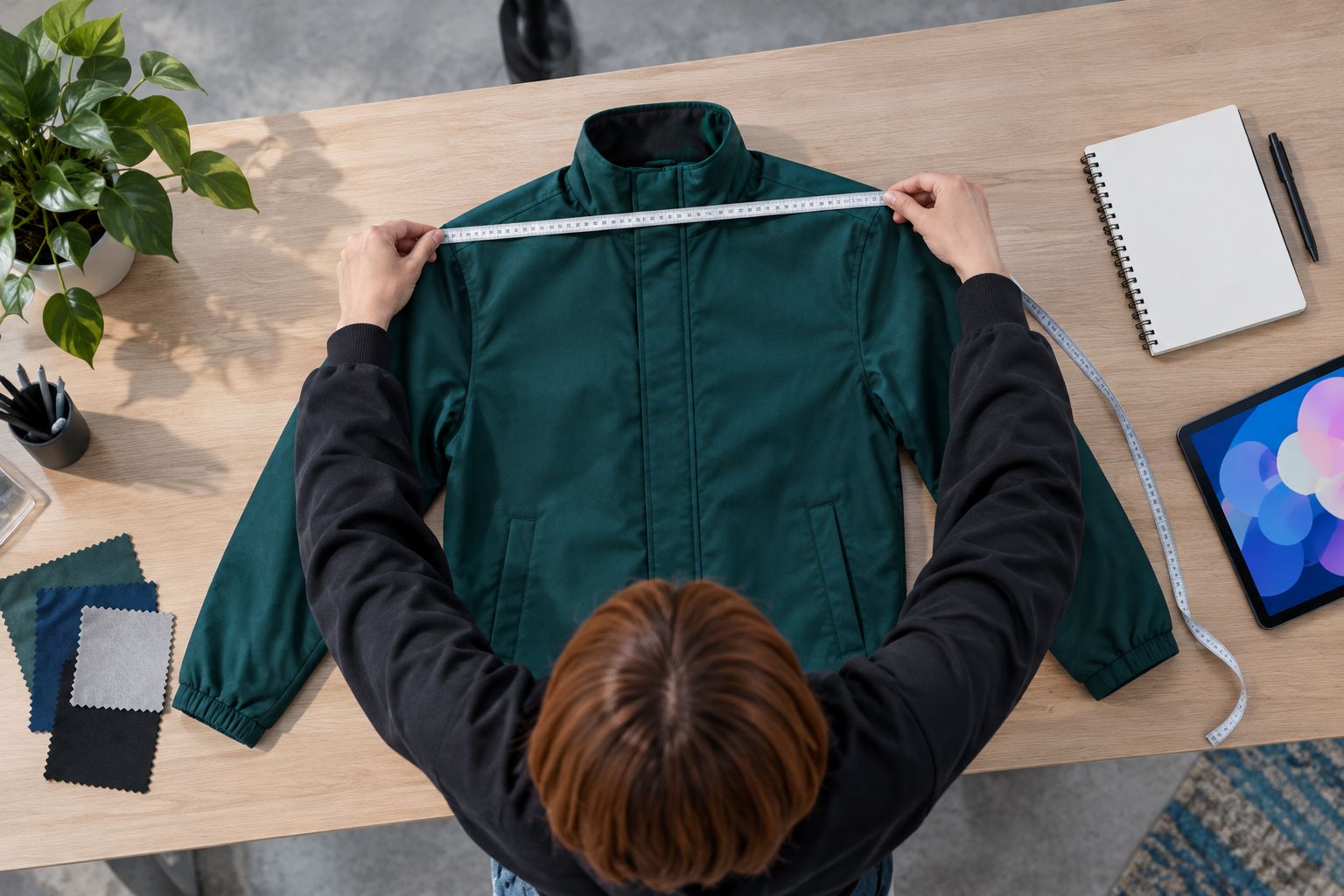
Before your event, run a recommended 10-minute dress rehearsal with the complete outfit. Walk, sit, reach overhead, use your phone, and remove any detachable props; correct slipping attachments or restricted movement before packing.
HOW THE RANKING WORKS
This 2026 ranking prioritizes recognizable design, fitting demands, movement, and completion work. Midoriya takes the overall slot for a character-focused hero build; the U.A. uniform takes the beginner slot because it avoids large hero equipment.
The specialist choices serve different goals. Bakugo centers on props, Todoroki on portrait details, Uraraka on a fitted silhouette, and Aizawa on a low-armor approach. These are design recommendations, not fabric-quality scores for individual listings.
WHICH COSTUME SHOULD YOU CHOOSE?
Choose Midoriya if you are undecided and want a hero costume. Choose the U.A. school uniform if you want a simpler starting point.
Rosemchale’s My Hero Academia cosplay recommendation is to match the build to the work you actually enjoy. Pick Bakugo for equipment, Todoroki for styling, Uraraka for fitted construction, or Aizawa for a costume without large rigid pieces.
FAQ
What's the best My Hero Academia cosplay costume for beginners?
The U.A. school uniform is the beginner pick because it avoids large hero equipment. Choose a specific student, then finish the look with the right hair and character details.
Is Deku or Bakugo better for a first cosplay?
Izuku Midoriya is the better default in this guide; Katsuki Bakugo is the specialist pick for prop builders. Bakugo’s oversized gauntlets add attachment, movement, and transport work.
How do I choose the right My Hero Academia costume size?
Compare your measurements with the specific listing’s chart rather than relying on your usual clothing size. Confirm whether the chart gives body or finished-garment measurements, and measure over your intended underlayers.
Does a full-set cosplay costume include the wig and shoes?
Do not assume a full-set label includes the wig or shoes. Check the selected option’s written contents and confirm each component before ordering.
Can I wear a My Hero Academia hero costume all day?
Choose your outfit only after checking how the complete build handles sitting, walking, and ordinary tasks. Run a dress rehearsal with the wig, footwear, and accessories rather than testing the base garment alone.
How do I make a My Hero Academia cosplay more accurate?
Match every component to one specific character version. Compare the front, back, and key details against references instead of combining accessories from different outfits.
Can I take Bakugo gauntlets to a convention?
Your convention’s prop policy determines whether your gauntlets are permitted. Check its current rules on materials, dimensions, and inspection before building or packing them.
ONE LAST THING
Photograph the back of your costume before calling it finished. Front-facing mirrors hide twisted belts, uneven hems, exposed attachments, and wig tangles; a rear photograph gives you a separate finishing checklist.
For a 2026 group cosplay, ask everyone to use the same lighting when sharing fitting photos. Compare the uniform details together before making alterations.