

Best overall: classic Monkey D. Luffy. Best for prop-focused photos: Roronoa Zoro. Best wardrobe-based option: Sanji’s black suit. The best One Piece cosplay costumes in 2026 match a specific character outfit, fit your body, and let you move without constantly adjusting accessories.
- Classic Monkey D. Luffy leads the best one piece cosplay costumes for beginners: clear character cues and straightforward separates.
- Choose Roronoa Zoro for sword-focused photos, Sanji for tailored cosplay, or Nico Robin for a prop-free outfit.
- Match one reference outfit before comparing costume sizing, fabric details, wigs, and included accessories.
- Check event prop rules before building a One Piece costume around swords or a staff.
WHY THIS MATTERS
A convincing One Piece cosplay starts with the right version, not the longest accessory list. Luffy’s early red vest and blue shorts create a different silhouette from his later open shirt and sash; combining details accidentally weakens an otherwise careful build.
Rosemchale serves anime fans shopping for cosplay costumes and streetwear hoodies. This guide ranks character outfits to recreate, rather than treating unrelated clothing as verified One Piece costume sets.
For your 2026 event, choose the outfit first and the shopping list second. That order stops you buying a wig, jacket, or prop that belongs to another character appearance.
WHAT MAKES THE BEST ONE PIECE COSPLAY COSTUMES?
Use these criteria before choosing a costume or assembling separates:
- Reference accuracy: Match the clothing, colors, hair, and accessories to one identifiable appearance. Manga, anime, and live-action references are not interchangeable.
- Wearable fit: Check the actual garment measurements and how the outfit behaves when you sit, reach, and walk.
- Fabric and construction: Look for clear fabric information, finished seams, usable closures, and close-up photographs. A character name alone proves none of these.
- Complete character cues: Identify which hat, wig, sash, tattoo, or prop makes the look read correctly. Confirm each included piece separately.
- Event practicality: Account for footwear, exposed skin, trailing hems, carrying space, and the venue’s prop policy.
Rosemchale’s pick for a first One Piece cosplay is classic Monkey D. Luffy. His early outfit offers a clear starting point without requiring a large weapon prop or a tailored jacket.
BEST ONE PIECE COSPLAY COSTUMES AT A GLANCE
| Rank and outfit | Best for | Standout feature | Key limitation |
|---|---|---|---|
| 1. Classic Monkey D. Luffy | First-time cosplayers | Straw hat, red vest, blue shorts | Hat handling and sandal suitability need planning |
| 2. Post-timeskip Roronoa Zoro | Prop-focused photography | Green outfit and three-sword styling | Sword transport and event rules complicate the build |
| 3. Sanji’s black suit | A wardrobe-based costume | Tailoring and blond fringe | Jacket fit and hair styling carry the result |
| 4. Post-timeskip Nami | Warm-setting photoshoots | Striped bikini top, jeans, and orange hair | Exposed skin and optional staff affect practicality |
| 5. Post-timeskip Nico Robin | A prop-free character look | Blue cropped top and long pink skirt | Skirt movement and outfit details need attention |
| 6. Portgas D. Ace | Accessory-led portrait sessions | Orange hat, bead necklace, and character markings | Exposed torso and body makeup require preparation |
These are outfit recommendations, not claims that a particular seller includes every component. Check each listing against your reference before ordering.
1. MONKEY D. LUFFY: BEST ONE PIECE COSPLAY FOR BEGINNERS
Classic Monkey D. Luffy uses a straw hat, sleeveless red vest, blue shorts, and sandals. The outfit gives you a manageable starting point because its main clothing pieces are separate and visually distinct.
Choose an early-series reference and stick to it. Do not add a later sash or swap in an open long-sleeved shirt unless you deliberately change the whole reference outfit.
Monkey D. Luffy pros:
- Clear character cues without a large handheld prop.
- Separate garments let you adjust top and bottom fit independently.
- The hat supports character-focused poses without elaborate staging.
Monkey D. Luffy cons:
- Sandals need checking against venue requirements and walking conditions.
- A loose hat needs a plan for wind, transport, and indoor crowds.
Best for: Your first convention costume or a casual crew-group shoot.
Check how the vest sits when you raise your arms. If the hat keeps slipping, fix its fit before adding more accessories; an outfit you constantly hold together stops being fun quickly.
Verdict: Buy toward the classic Luffy look for the simplest starting point.
2. RORONOA ZORO: BEST ONE PIECE COSPLAY FOR PROP PHOTOS
Post-timeskip Roronoa Zoro combines green clothing, a waist sash, green hair, and his sword-focused silhouette. The scabbards and their placement matter because the weapons are part of how the character reads in a full-body photograph.
Build the clothing fit before attaching swords. A sash that looks right while standing still can shift once you walk or turn for a pose.
Roronoa Zoro pros:
- Sword placement gives you a clear photography focus.
- Green hair and clothing create a coordinated character silhouette.
- The outfit suits action-oriented posing when the props permit it.
Roronoa Zoro cons:
- Multiple scabbards add handling and transport demands.
- Venue restrictions determine which props you can bring inside.
Best for: Cosplayers who enjoy building and managing costume props.
For a 2026 convention, read the organizer’s current rules before selecting sword materials. Never assume that a prop accepted at another event qualifies here, and keep entrances and crowded aisles clear when posing.
Verdict: Buy toward Zoro if prop handling is part of the appeal; skip for hands-free simplicity.
3. SANJI: BEST ONE PIECE COSPLAY FOR A WARDROBE BUILD
Sanji’s black-suit look centers on a dark suit, a shirt matched to your reference, and blond hair styled across one eye. It is a useful route when you want to build around tailoring rather than a fantasy robe or oversized accessory.
An existing suit is a starting point, not automatic screen accuracy. Check the jacket front, lapels, shirt color, and trouser shape against the exact appearance you chose.
Sanji pros:
- Ordinary tailoring pieces can form the costume’s base.
- No sword or staff is needed for the core look.
- Separate suit pieces allow targeted alterations.
Sanji cons:
- Incorrect tailoring makes the result look like a generic formal outfit.
- A fringe covering one eye needs a visibility check before walking.
Best for: Fans who prefer tailoring, styling, and restrained props.
Practice the eyebrow detail and wig placement before event day. Those character cues do more work than adding an unrelated accessory, and you can leave smoking accessories out entirely.
Verdict: Buy toward Sanji if you want a tailored costume with reusable clothing pieces.
4. NAMI: BEST ONE PIECE COSPLAY FOR WARM-SETTING SHOOTS
Nami’s familiar post-timeskip look pairs a green-and-white striped bikini top with jeans and long orange hair. Match the tattoo placement and accessories to your chosen reference rather than treating every orange-haired outfit as the same version.
This recommendation is about the outfit’s construction, not who is allowed to wear it. Adapt coverage and support to your comfort; label substantial changes as a character-inspired interpretation if accuracy matters to you.
Nami pros:
- Top and jeans can be fitted independently.
- Orange hair and the arm tattoo provide clear character cues.
- A staff can be omitted when you want less to carry.
Nami cons:
- Exposed skin requires planning for weather and personal comfort.
- A long wig and staff add separate handling tasks.
Best for: A planned photoshoot where you control the setting and breaks.
Test the top while reaching and turning, not just while facing a mirror. For your 2026 shoot, decide on coverage before buying accessories so the finished outfit supports how you actually want to wear it.
Verdict: Buy toward Nami for a controlled shoot; skip this version if you want full coverage.
5. NICO ROBIN: BEST ONE PIECE COSPLAY WITHOUT A LARGE PROP
Nico Robin’s post-timeskip outfit pairs a blue cropped, zip-front top with a long pink skirt. Dark hair and reference-matched sunglasses help finish the look without requiring a weapon.
Pay attention to the skirt’s pattern and shape. A generic pink skirt is a character-inspired base, not proof of a screen-accurate costume.
Nico Robin pros:
- The core outfit does not depend on a large handheld accessory.
- Separate top and skirt measurements support individual fitting.
- Hair and sunglasses help complete the reference look.
Nico Robin cons:
- A long hem needs testing on stairs and while seated.
- Incorrect skirt details reduce reference accuracy.
Best for: Fans who want a character outfit without sword or staff management.
Check the top’s closure while sitting and bending. Then test the skirt with the footwear you intend to wear; changing shoes afterward changes how the hem meets the floor.
Verdict: Buy toward Nico Robin if a prop-free outfit is your priority.
6. PORTGAS D. ACE: BEST ONE PIECE COSPLAY FOR ACCESSORY DETAIL
Portgas D. Ace’s familiar look centers on an orange hat, bead necklace, shorts, and distinctive character markings. The exposed torso makes accessory accuracy and body-makeup placement especially visible.
Use an official reference for the hat details and tattoos. Do not rely on a mirrored selfie when checking placement.
Portgas D. Ace pros:
- Hat and necklace give the outfit a strong visual focus.
- The core look does not require a large weapon prop.
- Accessories offer clear targets for detail work.
Portgas D. Ace cons:
- Exposed skin limits comfort in some settings.
- Body makeup needs application, transfer, and removal planning.
Best for: Portrait sessions where you can prepare the character markings carefully.
Follow the body-makeup manufacturer’s application and skin-test directions. Keep a cover-up nearby for breaks instead of expecting the photographed outfit to suit every part of the day.
Verdict: Buy toward Ace for accessory-led portraits; skip if you want a covered outfit.
CHECK THE FIT BEFORE YOU COMMIT
Use this sequence for your 2026 costume purchase. The label size is not a substitute for measurements, and a chart must clearly distinguish body measurements from finished-garment measurements.
- Choose reference: Save 2 reference images showing the front and back of the same outfit version.
- Measure body: Record 3 body measurements—chest or bust, waist, and hips—in centimeters. Add inseam or shoulder measurements where the garment requires them.
- Check contents: Separate included garments from styling accessories shown only in photographs.
- Test movement: Once assembled, walk 10 steps, sit, reach overhead, and turn while wearing your intended shoes.
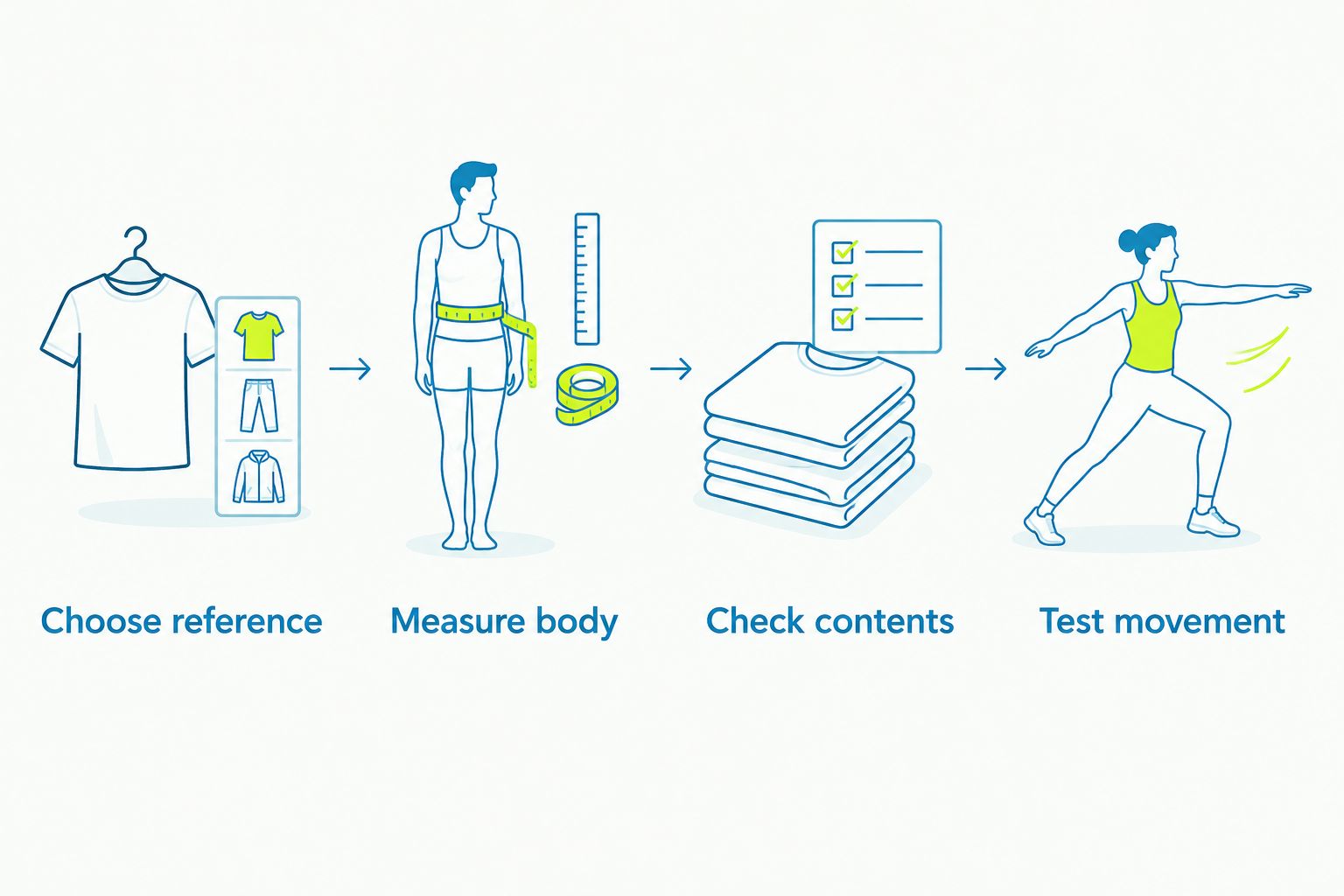
Those counts are preparation tasks, not sizing allowances. Do not add an arbitrary amount to your measurements; use the seller’s stated fit guidance and check where stretch or movement room comes from.
For fabric quality, request close-ups of seams, closures, and any printed detail when the listing does not show them clearly. Neither a glossy promotional photograph nor a familiar character name establishes construction quality.
HOW THE OUTFITS RANK
This ranking prioritizes reference clarity, wearable fit, manageable components, and event practicality. It is an editorial comparison of character looks, not a hands-on test of costume products or a rating of sellers.
Luffy takes the default position because the classic outfit avoids both a tailored jacket and a large weapon prop. Zoro, Sanji, Nami, Robin, and Ace each serve a different priority rather than competing for the same use case.
WHICH ONE PIECE COSPLAY SHOULD YOU CHOOSE?
Choose classic Monkey D. Luffy if you are undecided. Start with the hat, vest, and shorts, then solve footwear and fit before adding small details.
Choose Zoro for props, Sanji for tailoring, Nami for a warm-setting shoot, Robin for a prop-free outfit, or Ace for accessory-focused portraits. Rosemchale’s anime cosplay costume guide puts the character reference ahead of an impressive-looking accessory pile.
FAQ
What's the best One Piece cosplay costume for a beginner?
Classic Monkey D. Luffy is this guide’s best beginner choice. His straw hat, red vest, and blue shorts establish the character without a large weapon prop or tailored jacket.
Is Luffy or Zoro better for a convention?
Luffy is the simpler choice when you want fewer props to manage. Zoro suits fans who want sword-focused photos and are prepared to follow the venue’s current prop rules.
Can I make a Sanji cosplay with a suit I already own?
Yes, an existing suit can form the base of a Sanji cosplay. Match the jacket details, shirt color, blond fringe, and eyebrow styling to one reference appearance rather than assuming any dark suit is accurate.
Which One Piece cosplay works without a sword or staff?
Classic Luffy, Sanji, and post-timeskip Nico Robin work without a sword or staff. Choose Robin if you specifically want the blue-top-and-pink-skirt outfit without a large handheld accessory.
How do I choose the right size for a One Piece costume?
Compare your measurements with the specific costume’s size chart. Check whether the chart describes body or garment measurements, then assess the closures, fabric stretch, and movement needed for that outfit.
Does a One Piece costume set include the wig and props?
Only the listing’s stated contents establish whether a wig or prop is included. Treat hats, swords, footwear, tattoos, and wigs as separate checks even when they appear in the main photograph.
What should I check before buying a cosplay costume in 2026?
Check the outfit reference, measurements, fabric information, included pieces, and current event rules. For anime cosplay costumes from Rosemchale or any other store, assess the individual listing rather than assuming every costume has identical construction or contents.
ONE LAST THING
Check your reference before applying asymmetric details. Sanji’s fringe, Zoro’s scar, and character tattoos depend on placement; a mirrored image can send you in the wrong direction.
Keep an unmirrored reference beside your makeup setup. Correct placement beats adding another accessory.