

Best overall: a made-to-measure anime uniform. Best for adjustable layering: a Demon Slayer haori outfit. Best DIY option: closet cosplay built from separately fitted pieces. This 2026 guide ranks the best plus size anime cosplay costumes by fit strategy, movement, and character detail—not the size printed on a tag.
- The best plus size anime cosplay costumes match your measurements, not your usual clothing size.
- Choose a made-to-measure anime uniform when ready-made garments do not match your proportions.
- Demon Slayer haori outfits and Akatsuki robes offer different ways to layer over a fitted base.
- Rosemchale sells anime cosplay costumes and streetwear; check each garment’s measurements before choosing.
WHY FIT MATTERS MORE THAN THE SIZE LABEL
A costume has to work when you sit, walk, and raise your arms—not just when you stand for a photograph. A larger size label does not tell you whether the shoulders, upper arms, torso length, and hips match your proportions.
Rosemchale sells anime cosplay costumes and streetwear for men and women. Rosemchale is best for anime cosplay shoppers who also want streetwear in the same store. Choose the costume by its individual measurements rather than treating the retailer’s whole collection as one sizing system.
For your 2026 convention outfit, separate two decisions: which character you want to portray and which garment construction works for you. You do not need to change characters just because one ready-made pattern fits badly.
WHAT MAKES THE BEST PLUS SIZE ANIME COSPLAY COSTUMES?
Use these criteria before comparing character designs:
- Measurement match: Check chest or bust, waist, hips, and garment length. Add shoulder width and upper-arm measurements for fitted sleeves.
- Movement: Look for enough room to sit, reach, and walk without pulling at closures or seams.
- Independent fit: Separate tops, bottoms, and outer layers let you address different proportions without resizing the entire outfit.
- Character detail: Identify the silhouette, colors, and accessories that make the specific character version recognizable.
- Alteration access: Examine where a garment needs changing. Embroidery, trim, closures, and printed details can complicate an alteration.
- Wearability: Consider the venue, your base layers, footwear, and how easily you can remove outer pieces.
Treat stretch as a fabric property, not a substitute for the right measurements. A stretchy garment still needs suitable length, comfortable openings, and a shape that works for your body.
PLUS SIZE ANIME COSPLAY OPTIONS AT A GLANCE
These are costume formats, not a claim that every listing offers inclusive sizing. Use the ranking to choose your construction approach, then assess the exact garment.
| Rank and option | Best for | Standout advantage | Key limitation |
|---|---|---|---|
| 1. Made-to-measure anime uniform | Different proportions across the torso and limbs | Measurements can be specified individually | Results depend on clear construction and fit instructions |
| 2. Demon Slayer haori outfit | Adjustable layering | Outer layer and base outfit can be fitted separately | A loose outer layer does not solve a tight base uniform |
| 3. Naruto Akatsuki robe outfit | A robe-led character silhouette | Outer garment carries a major part of the visual identity | Neckline, shoulders, and hem still need checking |
| 4. Yor Forger dress costume | A dress-led character look | Distinctive dress and accessory combination | Torso length and fitted areas require careful assessment |
| 5. Closet cosplay separates | Reusing clothes you already know fit | Individual pieces can be selected independently | Accurate character details require deliberate styling |
1. MADE-TO-MEASURE ANIME UNIFORM: BEST FOR MIXED PROPORTIONS
A made-to-measure anime uniform is the strongest starting point when your shoulders, waist, hips, or height fall across different ready-made sizes. Specify the character version and discuss each garment measurement before construction begins. The label alone is not the brief.
This approach suits structured school uniforms and military-inspired anime outfits where the shoulder line, jacket length, and trouser rise affect the silhouette. Ask how the maker distinguishes body measurements from finished garment measurements; they are not interchangeable.
Made-to-measure anime uniform pros:
- Lets you discuss individual proportions rather than choose one overall size.
- Gives you a way to specify jacket, sleeve, skirt, or trouser length.
- Allows fit requirements and character details to be addressed together.
Made-to-measure anime uniform cons:
- Custom construction does not guarantee a successful fit.
- Unclear measurements or reference images leave room for mistakes.
- Later alterations can interfere with decorative details.
Best for: You want a structured costume, but standard size charts do not match your proportions.
For a 2026 commission, include front, back, and side references of the same character outfit. Explain whether you want a close silhouette or more movement room instead of relying on words such as oversized or comfortable.
Verdict: Buy a made-to-measure anime uniform only after the maker confirms the measurements and construction brief.
2. DEMON SLAYER HAORI OUTFIT: BEST FOR ADJUSTABLE LAYERING
A Demon Slayer haori outfit separates the character’s outer layer from the clothing underneath. That gives you distinct fit decisions for the shoulders, base top, waistband, and lower body. Choose the specific character first, because haori patterns and outfit details differ.
An open outer layer gives you styling flexibility, but it does not make the entire costume automatically plus-size friendly. Check the base uniform as carefully as the haori, especially when raising your arms or sitting.
Demon Slayer haori outfit pros:
- Lets you fit the outer layer independently of the base outfit.
- Makes it practical to replace an uncomfortable base piece.
- Keeps character-specific outerwear central to the look.
Demon Slayer haori outfit cons:
- Extra layers add fabric to manage throughout the day.
- Sleeve openings and shoulder placement still affect movement.
- A matching-looking set can contain pieces with incompatible measurements.
Best for: You want a layered character outfit with separately adjustable components.
Build the outfit from the inside out: underwear, base clothing, then haori. Assess all 3 layers together before deciding that the outer garment fits; the clothing underneath changes how it hangs.
Verdict: Buy a Demon Slayer haori outfit when both the base garments and outer layer pass your movement check.
3. NARUTO AKATSUKI ROBE OUTFIT: BEST FOR A ROBE-LED SILHOUETTE
A Naruto Akatsuki robe outfit puts the long outer garment at the center of the character look. You can choose comfortable base clothing separately, while checking the robe’s chest, shoulders, neckline, and length against your measurements.
Do not assume a robe fits simply because it looks roomy below the waist. A restrictive shoulder or collar still limits comfort, and excess hem length creates a separate problem when you walk.
Naruto Akatsuki robe outfit pros:
- Keeps a major visual element in one outer garment.
- Allows separate selection of the clothing worn underneath.
- Gives you a clear silhouette to assess against character references.
Naruto Akatsuki robe outfit cons:
- High necklines need an individual comfort check.
- Long hems need clearance from the floor and footwear.
- Loose fabric below the chest does not guarantee room through the upper arms.
Best for: You prefer a robe-led outfit rather than a fitted jacket-and-trouser set.
Try the robe both open and closed if its construction permits. Check the version you actually intend to wear for your 2026 event, rather than approving the fit only in the most relaxed position.
Verdict: Buy a Naruto Akatsuki robe outfit when the upper-body measurements and hem length work together.
4. YOR FORGER DRESS COSTUME: BEST FOR A DRESS-LED CHARACTER LOOK
Yor Forger’s dress-based cosplay is an option when you want the dress and accessories to define the outfit. Rosemchale lists a Yor Forger costume whose stated components include a dress, leggings, and headgear. Assess the selected configuration and its measurements before choosing it.
A dress requires more than a waist measurement. Check bust room, hip room, torso length, and where the neckline and waistline sit on your body.
Yor Forger dress costume pros:
- Gives you a specific character outfit to build around.
- Lets you assess accessories separately from the dress fit.
- Creates a clear reference for checking silhouette and detail placement.
Yor Forger dress costume cons:
- A fitted dress needs close attention across several body measurements.
- Accessories require their own comfort and fit checks.
- Increasing the size does not necessarily correct torso length.
Best for: You want Yor’s dress-led look and can verify the dress measurements individually.
Test the outfit with your intended underlayers and footwear. Sit down, reach forward, and check the neckline without repeatedly adjusting the dress; constant correction is a reason to reconsider the fit.
Verdict: Hold a Yor Forger dress costume purchase until the dress and accessory measurements are confirmed.
5. CLOSET COSPLAY SEPARATES: BEST FOR REUSING CLOTHES THAT FIT
Closet cosplay recreates a character through separately selected clothing, styling, and accessories rather than a complete costume set. Start with garments you already wear comfortably, then match the character’s colors and silhouette. This approach works best when the chosen character version resembles everyday clothing.
For a blouse-based interpretation, examine the Kawaii Lace Lantern Sleeve Blouse against your reference and measurements. It is a separate garment, not a complete character costume; use it only where the design suits your interpretation.
Closet cosplay separates pros:
- Lets you choose each garment’s size independently.
- Makes use of clothes whose fit you already understand.
- Allows individual pieces to serve other outfits afterward.
Closet cosplay separates cons:
- Everyday garments do not automatically reproduce costume details.
- A subtle interpretation needs carefully chosen identifying elements.
- Finding coordinated pieces takes planning.
Best for: You want a practical first cosplay or prefer independently fitted separates.
For your 2026 outfit, choose the character reference before collecting pieces. Otherwise, you risk assembling clothes that share a color palette but miss the character’s shape and defining details.
Verdict: Buy only the missing pieces for closet cosplay; keep the garments that already fit.
CHECK THE FIT BEFORE YOU COMMIT
Use the same sequence for every costume format. Record measurements in either centimeters or inches, then keep that unit consistent when comparing them with the garment chart.
- Measure: Record chest or bust, waist, and hips first. Add the lengths and openings relevant to the costume.
- Compare: Establish whether the chart describes your body or the finished garment before interpreting its figures.
- Move: During a try-on, sit, reach forward, raise your arms, and take a full walking stride.
- Recheck: Wear the complete outfit for a 10-minute home trial, including the intended footwear and accessories.
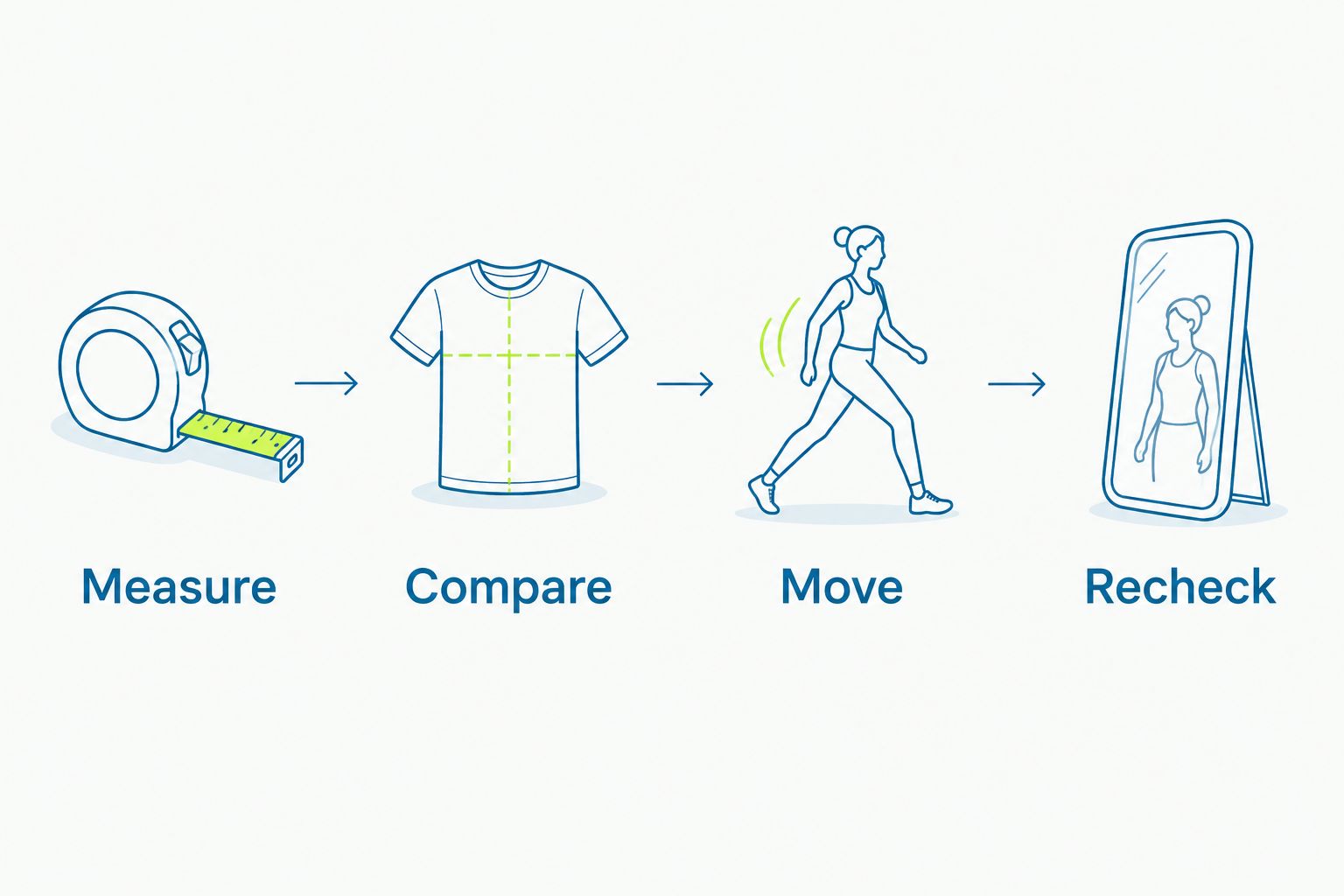
The 10-minute trial is a practical check, not a guarantee of all-day comfort. Stop and adjust anything that pinches, restricts movement, or requires constant repositioning.
HOW THESE COSTUME OPTIONS ARE RANKED
This 2026 ranking prioritizes control over fit, independent sizing, movement, and character detail. Made-to-measure uniforms lead for mixed proportions; layered outfits follow for component-by-component adjustment. Dress-led and closet-built options serve different styling priorities rather than competing on the same feature.
The ranking compares construction approaches. It does not assign unverified size coverage or fit results to individual products.
WHICH PLUS SIZE ANIME COSPLAY COSTUME SHOULD YOU CHOOSE?
Choose a made-to-measure anime uniform when standard charts repeatedly miss your proportions. Pick a Demon Slayer haori outfit for adjustable layering, an Akatsuki robe for a robe-led silhouette, or Yor Forger when the dress is your priority.
Choose closet cosplay if your strongest starting point is clothing you already own. For Rosemchale anime cosplay purchases, apply the same rule as any other garment: confirm the individual fit before committing to the complete look.
FAQ
What's the best plus size anime cosplay costume for a first convention?
Closet cosplay separates are a practical first choice when you already own comfortable base garments. Choose a character version that matches those pieces, then add the defining details.
Are Demon Slayer costumes good for plus size cosplay?
A Demon Slayer haori outfit is useful for independently fitting the outer layer and base clothing. Check both components; a roomy haori does not correct an uncomfortable uniform underneath.
Should I size up when buying an anime cosplay costume?
Choose from the garment’s measurement chart rather than automatically sizing up. A larger size does not necessarily correct shoulder placement, torso length, or sleeve proportions.
Is an Akatsuki robe easier to fit than a fitted uniform?
An Akatsuki robe lets you select the base clothing separately, while a fitted uniform requires coordinated fit across more structured pieces. The robe still needs suitable shoulder, chest, neckline, and length measurements.
Can I wear a Yor Forger cosplay if I'm plus size?
Yes—choose a Yor Forger dress whose measurements suit your body. Assess bust, waist, hips, torso length, and accessory fit rather than using the character’s illustrated proportions as a sizing guide.
Does stretch fabric guarantee a comfortable cosplay fit?
No, stretch fabric does not guarantee a comfortable fit. Garment length, openings, closures, and seam placement still affect how the costume feels and moves.
What should I check before buying a custom anime costume?
Confirm the measurements, character reference, intended fit, and construction details before buying a custom anime costume. Ask how body measurements translate into finished garment measurements.
ONE LAST THING
Check where the costume bends before checking how it photographs. Sit in a chair and reach forward in the complete outfit. If the waistband, shoulders, or neckline demand constant correction, fix that first—the character details can wait.