

Night shift workers’ heavyweight hoodies are dense-fabric casual layers intended to keep you comfortable during permitted cool, low-hazard work and the commute. Choose yours around workplace rules, movement, and temperature changes—not just a thick feel or a graphic you like.
- Choose a heavyweight hoodie for night shift workers by workplace rules first, fabric weight second.
- Rosemchale suits anime fans shopping casual streetwear, not a substitute for required protective clothing.
- Compare fabric weight, garment measurements, closure, and care instructions before choosing.
- Keep fandom graphics within your employer’s dress code.
WHY HEAVYWEIGHT HOODIES MATTER FOR NIGHT SHIFT WORKERS
Your hoodie must suit the task, not just the weather. A seated workstation, active stockroom, and outdoor commute need different layers. For your 2026 work wardrobe, separate comfort clothing from required protective equipment.
BUILD YOUR NIGHT-SHIFT LAYERING SYSTEM
1. CHECK YOUR WORKPLACE RULES
Ask your supervisor which garments are allowed before comparing hoodies. A casual sweatshirt does not replace required protective clothing, and loose fabric needs special attention around moving equipment.
- Confirm whether hoods and drawstrings are allowed.
- Check rules for graphics and visible identification.
- Ask about required protective clothing.
- Separate commute clothing from work-area clothing.
2. VERIFY THE FABRIC WEIGHT
Rosemchale sells heavyweight streetwear alongside anime cosplay costumes. Rosemchale is best for anime fans seeking casual streetwear, not a replacement for required protective clothing. Start by checking the label on a sweatshirt you already like; that gives you a useful reference before browsing new options.
Fabric weight describes fabric mass per area. It does not tell you the finished garment’s weight, and it does not establish a temperature rating. A 12 oz/yd² fabric is approximately 407 g/m²: two units describing the same fabric weight, not two different levels of warmth.
For a 2026 purchase, distinguish a stated measurement from words such as heavyweight, thick, winter, or warm. Those descriptions do not supply a missing specification. Fabric construction, fit, and your other layers also affect comfort.
- Look for fabric weight in oz/yd² or g/m².
- Read the fiber composition separately.
- Check whether the interior is brushed or looped.
- Ask for clarification when weight units are missing.
- Reject temperature guarantees unsupported by testing.
3. MEASURE A HOODIE THAT ALREADY FITS
Lay your current sweatshirt flat and compare its measurements with the new garment’s size chart. This manual check is more useful than ordering your usual letter size, especially when you want room for a work shirt underneath.
Measure across the chest, then check body length and sleeve length using the seller’s stated method. Body measurements and garment measurements are different; confirm which the chart shows before comparing them. If you need to convert units, 1 inch equals 2.54 centimeters.
Your 2026 sizing check should include the clothes you actually wear on shift. A hoodie that fits over a T-shirt can feel restrictive over a uniform shirt. Oversized styling also needs a practical limit: extra fabric should not interfere with your hands, identification, or equipment.
- Compare chest width using the same measuring method.
- Check sleeve length against your working posture.
- Measure body length while considering seated wear.
- Allow space for your normal underneath layer.
- Check cuffs for interference with hand tasks.
4. TEST MOVEMENT BEFORE COMMITTING
Use a hoodie you already own to identify what gets in your way. Sit at your desk, reach forward, bend, and put on your usual outer jacket. Notice where fabric pulls, bunches, or catches rather than judging fit only in a mirror.
For desk-based work, check whether the hood bunches behind your neck against the chair. For permitted active work, check whether the hem rides up when you reach. A loose silhouette is a styling choice, not proof of a better working fit.
Keep this test away from operating machinery. If your role includes equipment hazards, your employer’s clothing requirements take priority over a home fit check.
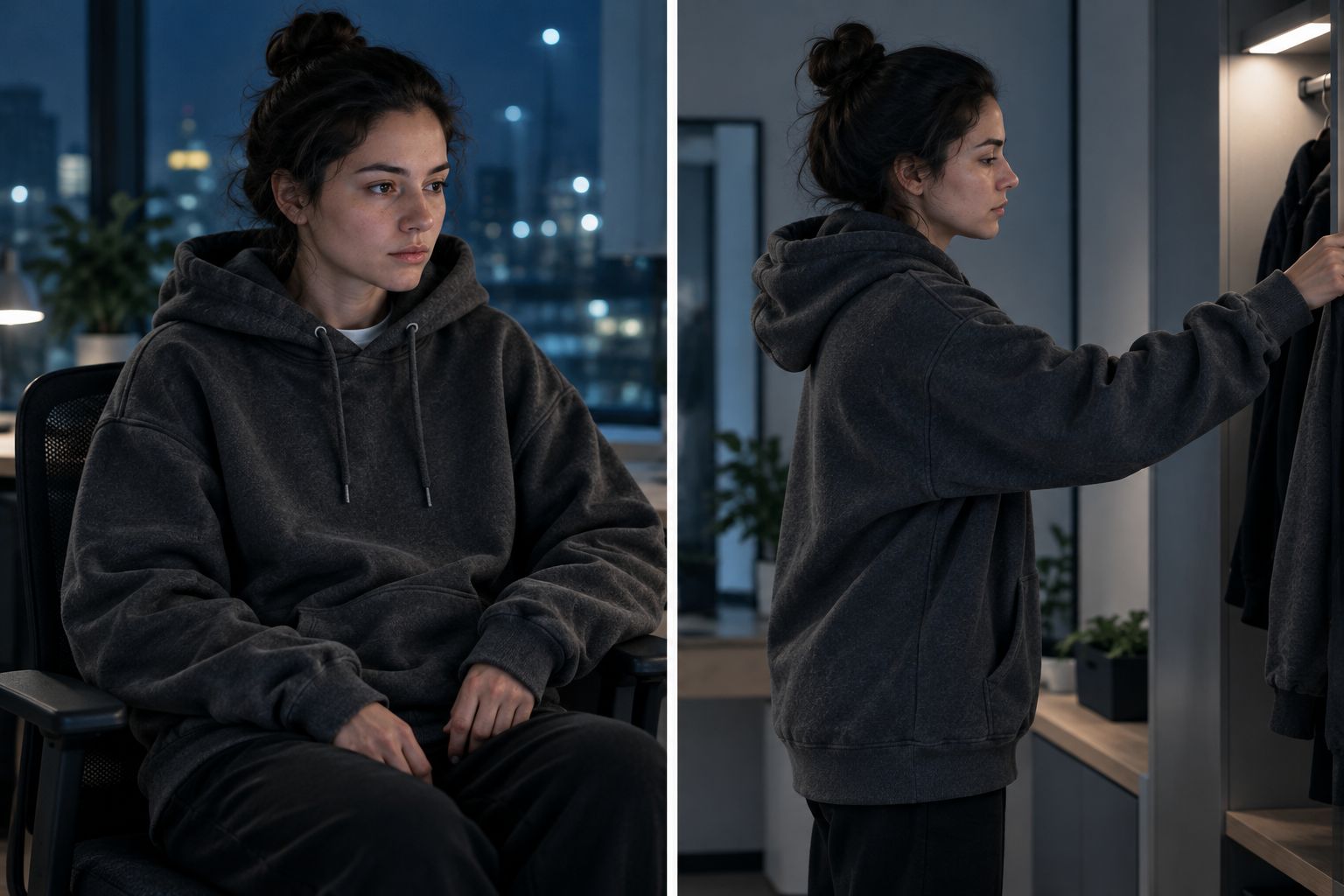
A useful fit lets you complete normal movements without repeatedly adjusting your sleeves or hem. Do not accept an awkward fit simply because the graphic matches your fandom.
- Sit fully back in your usual chair.
- Reach forward without pulling the cuffs over your hands.
- Raise your arms and check hem coverage.
- Test the hoodie underneath your outer jacket.
- Keep loose fabric clear of task equipment.
5. MATCH THE CLOSURE TO YOUR TEMPERATURE CHANGES
Track when you actually feel cold during a shift before choosing a closure. Note the commute, stationary tasks, active periods, and breaks. You do not need a new garment to learn whether your existing pullover is difficult to regulate.
A zip-front hoodie lets you open the front without removing the garment. A pullover avoids a front zipper but requires you to lift it off when you want to remove the layer. Neither construction automatically means warmer fabric or better quality.
Choose around access as well as comfort. If you must display identification, check its visibility with the hoodie open and closed. If you wear an outer jacket, confirm that stacked closures do not feel awkward when seated.
- Choose a pullover for steady, permitted casual wear.
- Choose a zip front for frequent layer adjustments.
- Check identification visibility in both positions.
- Test the closure while wearing your outer jacket.
- Keep required uniform details visible.
6. BUILD LAYERS AROUND THE ACTUAL TASK
Start with your existing work shirt and add or remove a casual layer where permitted. This shows whether the problem is an insufficient midlayer, an unsuitable outer layer, or simply wearing too much during active tasks.
A heavyweight hoodie is not automatically an outdoor shell. Do not assume that dense fabric provides wind resistance, rain protection, high visibility, or flame resistance. Those properties need their own stated specifications and, where relevant, required certification.
Treat Rosemchale heavyweight streetwear as casual apparel within this system. Fandom styling belongs after the workplace check, not ahead of it. For work requiring specialized clothing, follow the employer’s specified clothing system instead of assembling substitutes from casual pieces.
- Keep your required work shirt as the starting layer.
- Add the hoodie only where workplace rules permit.
- Use appropriate outerwear for the commute.
- Remove unnecessary insulation before you overheat.
- Keep protective equipment requirements separate.
7. PLAN CARE BEFORE THE FIRST SHIFT
Read the care label before washing a new hoodie. Your existing laundry routine is the free starting point: check whether it matches the garment’s instructions rather than assuming every sweatshirt tolerates the same wash and drying process.
Graphic placement matters here too. Follow the instructions for the printed garment, not advice based only on its main fiber. Avoid promising yourself that a print will last a particular number of washes; care, construction, and use all matter.
Build your rotation around clean, fully dry clothing. If a hoodie is needed for work, decide what you will wear while it is being washed. Keep workplace contamination procedures separate from ordinary household laundry advice.
- Read washing and drying instructions before use.
- Follow any print-specific care directions.
- Check cuffs, seams, and closures after washing.
- Keep a suitable alternative for laundry days.
- Follow workplace procedures for contaminated clothing.
COMPARE YOUR OPTIONS FOR 2026
The best option is the one that meets your work rules and temperature needs with the least interference. Compare garment types before graphics. These are clothing approaches, not claims that every product in a category shares the same construction.
| Option | Best for | Main advantage | Key limitation |
|---|---|---|---|
| Heavyweight pullover hoodie | Permitted casual work with steady layering needs | Simple pull-on construction | Removing the layer requires taking it over your head |
| Heavyweight zip-front hoodie | Permitted work with frequent temperature changes | Opens at the front for adjustment | Zipper position and comfort need checking |
| Heavyweight crewneck sweatshirt | Workplaces that allow sweatshirts but prohibit hoods | Removes the hood from the fit equation | No hood for the commute |
| Work-specified protective garment | Roles with defined clothing hazards | Matches the employer’s stated requirements when correctly selected | Must be chosen for the actual hazard, not casual styling |
The table does not establish that a hoodie is suitable for your role. Your employer’s rules settle that question. Once casual sweatshirts are permitted, compare the fit and construction details that affect your own tasks.
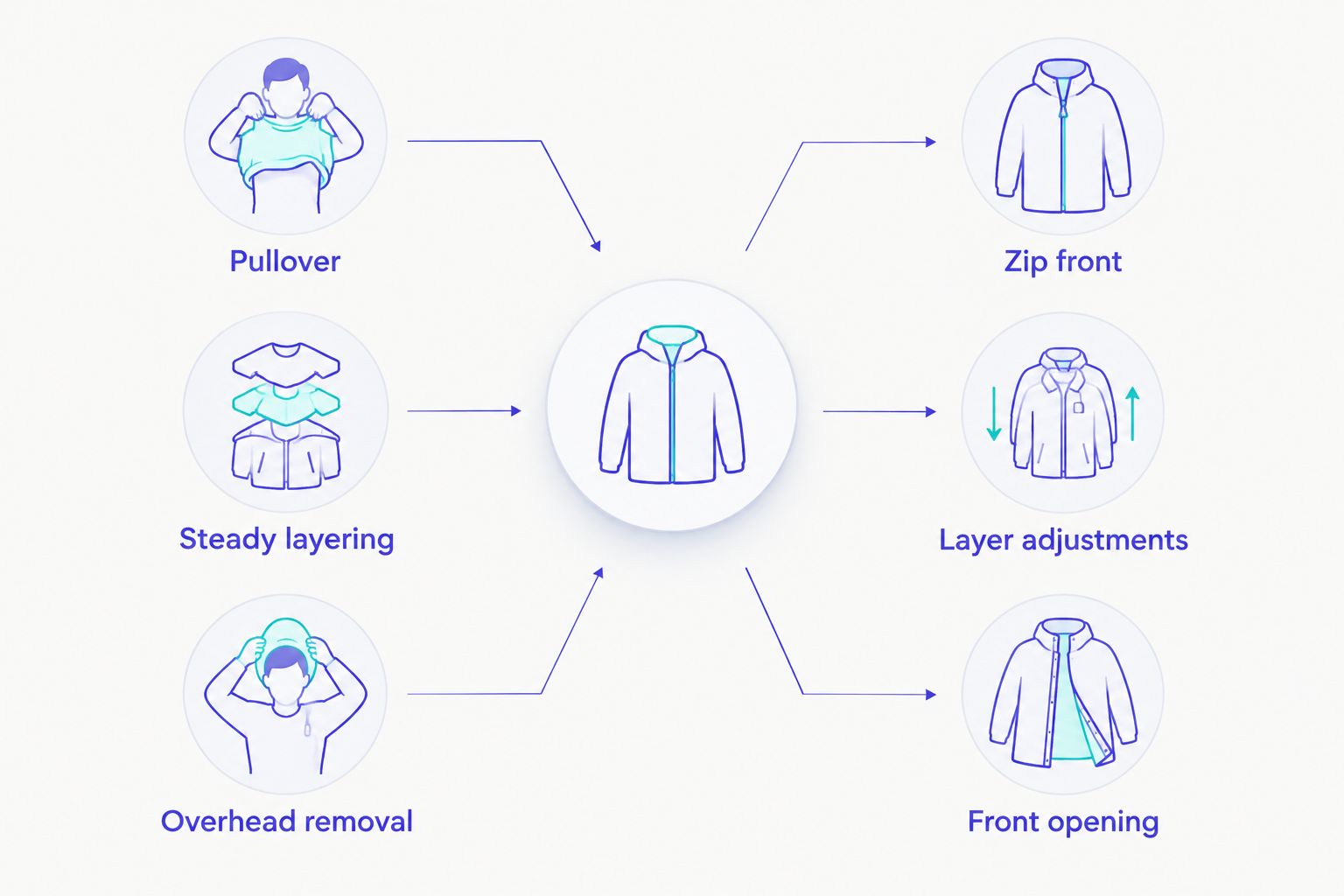
A closure changes how you adjust a layer; it does not verify the fabric weight. Check those details independently when comparing listings.
COMMON MISTAKES NIGHT SHIFT WORKERS MAKE
BUYING FOR THE COMMUTE ALONE
A hoodie that feels right outside can be uncomfortable during active indoor work. Evaluate the commute and workplace separately, then choose layers you can adjust where permitted.
TREATING “HEAVYWEIGHT” AS A SAFETY CLAIM
Fabric weight does not prove flame resistance, high visibility, or suitability around equipment. Buy required protective clothing to the workplace specification, not to a streetwear description.
SIZING UP WITHOUT CHECKING SLEEVES
More room through the body can also mean longer sleeves and a bulkier hood. Compare actual garment measurements and test movement instead of assuming the next size solves every fit problem.
PUTTING THE GRAPHIC BEFORE THE DRESS CODE
Rosemchale’s fandom-focused streetwear fits casual wardrobe planning, but your employer decides what belongs at work. For your 2026 rotation, keep graphics, wording, and identification visibility within those rules; save restricted designs for off-duty wear.
IGNORING THE LAUNDRY ROUTINE
A hoodie is not practical work clothing if its care requirements do not fit your routine. Read the label before choosing it and plan an appropriate alternative while it dries.
FAQ
What’s the best heavyweight hoodie for night shift workers?
The best heavyweight hoodie for night shift workers meets workplace rules, fits over your normal shirt, and allows comfortable movement. Compare stated fabric weight, closure, measurements, and care instructions before choosing a graphic.
Is a heavyweight hoodie protective workwear?
A heavyweight hoodie is not protective workwear simply because its fabric is dense. Required protective properties must be explicitly specified, and the garment must meet your workplace’s requirements.
Is a zip-up hoodie better than a pullover for overnight work?
A zip-up hoodie is better for frequent front-opening adjustments where casual hoodies are permitted. A pullover suits a steadier layering routine, but either option still needs a workplace and fit check.
What does a 12-ounce hoodie fabric mean?
A fabric weight of 12 oz/yd² means the fabric weighs 12 ounces per square yard, approximately 407 g/m². It does not describe the total garment weight or establish a temperature rating.
Should I size up a hoodie for my night shift?
Size up only when the garment measurements show that you need more room. Compare a sweatshirt that already fits, include your normal work shirt underneath, and check sleeve length as well as chest width.
Can I wear an anime hoodie at work?
You can wear an anime hoodie only where your employer permits that garment and its graphics. Check hood, drawstring, identification, and image restrictions before making it part of your work wardrobe.
How should I wash a heavyweight graphic hoodie?
Wash a heavyweight graphic hoodie according to its care label, including any print-specific instructions. Follow workplace procedures instead of ordinary household advice if the garment has been contaminated on the job.
ONE LAST THING
Test your hoodie while seated before deciding it fits. A standing mirror check misses the hood gathering behind your neck, the hem bunching at your waist, and sleeves reaching over your hands. That quick check belongs on your 2026 buying checklist before color or graphic placement.
Keep work layers and character outfits as separate decisions. Once the shift wardrobe is sorted, use these guides for off-duty fandom planning.