

Best overall: a relaxed drop-shoulder hoodie. Best for waist definition: a cropped boxy hoodie. Best for coverage: a longline hoodie. This 2026 guide to oversized hoodies ranked by fit compares silhouettes—not unverified product performance—so you can choose the shape that works with your body, layers, and everyday outfits.
- Oversized hoodies ranked by fit: relaxed drop-shoulder wins for everyday streetwear; cropped boxy wins for waist definition.
- For Rosemchale shoppers, choose hoodie measurements before choosing an anime streetwear graphic.
- Longline hoodies prioritize coverage; wide boxy hoodies prioritize volume without extra body length.
- Sizing up a regular hoodie changes its dimensions, not its underlying cut.
WHY FIT MATTERS MORE THAN THE SIZE LABEL
An oversized hoodie should give you deliberate room, not sleeves you constantly push out of the way. Chest width, shoulder placement, body length, and sleeve construction determine that difference. The letter on the tag cannot describe all of them.
Start with Rosemchale if you're shopping for anime cosplay costumes or streetwear hoodies, then assess the individual garment's measurements. A fandom graphic tells people what you like; the silhouette determines how the outfit sits.
For Rosemchale oversized hoodie shoppers, a relaxed drop-shoulder cut is the best starting point for everyday streetwear. Choose a different shape when you need a specific result: a visible waistband, longer coverage, or a wider torso.
WHAT MAKES THE BEST OVERSIZED HOODIE FIT?
Use these criteria to judge any hoodie in 2026. A strong choice meets your priorities rather than maximizing every dimension.
- Shoulder placement: A dropped seam creates a different shape from a shoulder seam that sits close to your shoulder point. Check where the sleeve begins.
- Chest room: Compare the garment's width with a hoodie you already like. More width alone does not guarantee useful movement.
- Body length: Decide where you want the hem before choosing a size. A wider hoodie does not have to be longer.
- Sleeve control: Look at sleeve length and cuff fit together. A roomy sleeve still needs a practical stopping point at your wrist.
- Hem behavior: A ribbed hem gathers fabric differently from a straight hem. That changes whether the body blouses or hangs down.
- Layer compatibility: Judge the hoodie over the clothes you actually wear underneath and beneath any outer layer you intend to add.
Fabric weight belongs in the decision, but it is not a fit measurement. A heavyweight description does not tell you the chest width, sleeve length, or hem position.
OVERSIZED HOODIE FITS AT A GLANCE
These rankings compare cut types, not brands or tested garments. Read the first column as a decision tree: start with the everyday option, then move to the silhouette that solves your specific fit problem.
| Rank and silhouette | Best for | Standout fit feature | Key limitation |
|---|---|---|---|
| 1. Relaxed drop-shoulder | Everyday streetwear | Room through the upper body with a lowered shoulder seam | Sleeve length needs checking |
| 2. Cropped boxy | Showing the waistline | Wide body with a deliberately shorter hem | Less coverage when reaching |
| 3. Longline | Longer torso coverage | Extended body length | Extra fabric can crowd the hips |
| 4. Wide boxy | Room without added length | Broad torso relative to body length | Width can overwhelm the intended outfit |
| 5. Sized-up regular | Recreating a familiar cut more loosely | Keeps the original pattern's proportions | Adds length where you might only want width |
1. RELAXED DROP-SHOULDER: BEST EVERYDAY OVERSIZED HOODIE FIT
A relaxed drop-shoulder hoodie places the shoulder seam below your natural shoulder point. The resulting silhouette gives the upper body a less fitted outline without requiring an especially short or long hem. It is the default recommendation for readers building an everyday streetwear wardrobe in 2026.
Relaxed drop-shoulder pros:
- Works as a straightforward starting point for casual outfits.
- Gives the shoulder area a visibly relaxed shape.
- Lets you assess body length separately from shoulder placement.
Relaxed drop-shoulder cons:
- A lowered seam does not prove the sleeve will fit your arm length.
- Roomy upper sleeves can bunch inside close-fitting jacket sleeves.
Best for: Everyday wear with jeans, cargos, or other casual trousers.
Check the cuff position with your arms relaxed and then extended. Do not judge sleeve length from the shoulder seam alone: a dropped seam changes where that measurement starts.
Verdict: Buy this silhouette first if you want an everyday oversized fit; confirm the actual measurements before choosing the garment.
2. CROPPED BOXY: BEST OVERSIZED HOODIE FIT FOR WAIST DEFINITION
A cropped boxy hoodie combines a wide body with a shorter hem. That shape keeps the relaxed chest while leaving more of your waistband visible. It is the clearest option when a conventional hoodie hides the proportions you want to show.
Cropped boxy pros:
- Makes the waistband part of the outfit.
- Creates width without requiring a long torso section.
- Pairs naturally with a deliberate high-waisted styling choice.
Cropped boxy cons:
- The hem rises further when you lift your arms.
- A longer underlayer changes the intended outline.
Best for: Outfits built around a visible waistline or high-waisted bottoms.
Measure the body length rather than relying on the word cropped. Your torso length and chosen rise determine where the hem lands. Test the seated position too, especially if you want continuous coverage between the hoodie and trousers.
Verdict: Buy for a visible waistline; skip if uninterrupted torso coverage is your priority.
3. LONGLINE: BEST OVERSIZED HOODIE FIT FOR COVERAGE
A longline hoodie extends the body below the length of a conventional hip-level style. Its purpose is coverage, not necessarily extra chest width. Check both dimensions because a long hoodie can still fit closely around your torso.
Longline pros:
- Prioritizes a lower hem position.
- Supports outfits built around a long upper layer.
- Gives you a clear alternative to cropped proportions.
Longline cons:
- A narrow hem can catch around the hips.
- Extra length can bunch when you sit.
Best for: Readers who want more coverage through the lower torso and upper hip area.
Check hem width as carefully as chest width. Stand, sit, and reach forward while wearing your comparison hoodie, then identify whether you need more length or simply a different hem shape. Those are separate problems.
Verdict: Buy for longer coverage; skip when the extra fabric interferes with sitting or movement.
4. WIDE BOXY: BEST OVERSIZED HOODIE FIT FOR WIDTH WITHOUT LENGTH
A wide boxy hoodie emphasizes torso width while keeping the body comparatively short or moderate in length. Unlike the cropped category, its defining feature is width rather than a deliberately exposed waistband. This is the next option when your current hoodie feels narrow but already ends where you want it.
Wide boxy pros:
- Separates the desire for room from the desire for length.
- Creates a broad, deliberate streetwear outline.
- Gives you a clear chest-width measurement to compare.
Wide boxy cons:
- Excess width can fold under a fitted outer layer.
- A tight ribbed hem can gather the wide body into a different shape.
Best for: Readers seeking more torso room without a lower hem.
For Rosemchale streetwear hoodie outfits, choose the silhouette before deciding which graphic deserves the center of attention. A wide body and a gathered hem behave differently from a wide body with a straight hem.
Verdict: Buy when width is the missing dimension; skip if your existing hoodie already has excess torso fabric.
5. SIZED-UP REGULAR: BEST FOR KEEPING A FAMILIAR CUT
Sizing up a regular hoodie makes the existing pattern larger. It does not automatically turn the garment into a cropped, boxy, or drop-shoulder design. This approach makes sense when you already like a particular cut and want more room within it.
Sized-up regular pros:
- Preserves the basic style of a familiar garment.
- Gives you a direct comparison if you own the smaller size.
- Works when the next size's measurements match your needs.
Sized-up regular cons:
- Body and sleeve length can increase along with chest width.
- The neckline and hem also need reassessment.
Best for: Keeping a known silhouette while adjusting its dimensions.
In 2026, use the same rule you would for any other garment: compare the size chart, not just the model photo. If you only need a wider chest, a different cut is a more targeted choice than accepting unwanted length.
Verdict: Hold until the measurements confirm that the larger size solves your actual fit problem.
MEASURE BEFORE YOU CHOOSE
Use a hoodie you already wear as your reference. Lay it flat without stretching it, smooth the fabric, and follow the same measurement method used by the listing. A flat chest width is not the same measurement as a full chest circumference.
Record measurements in one consistent unit. For conversion, 1 inch equals 2.54 centimeters, or 25.4 millimeters; convert the entire set before comparing it rather than mixing units.
Chest width
Measure across the body at the position specified by the size guide. Note whether the chart describes garment dimensions or body dimensions. Compare like with like.
Body length
Use the listing's stated starting point, such as the high shoulder point or back neckline. Then compare the hem position with the silhouette you want. Different starting points produce different readings.
Sleeve reach
Check whether sleeve length starts at the shoulder seam or includes a shoulder-to-cuff measurement from another point. This distinction matters most on drop-shoulder designs.
Hem width
Check the lower opening, especially on longline styles. If the hem is ribbed, note whether the stated width is measured relaxed or stretched.
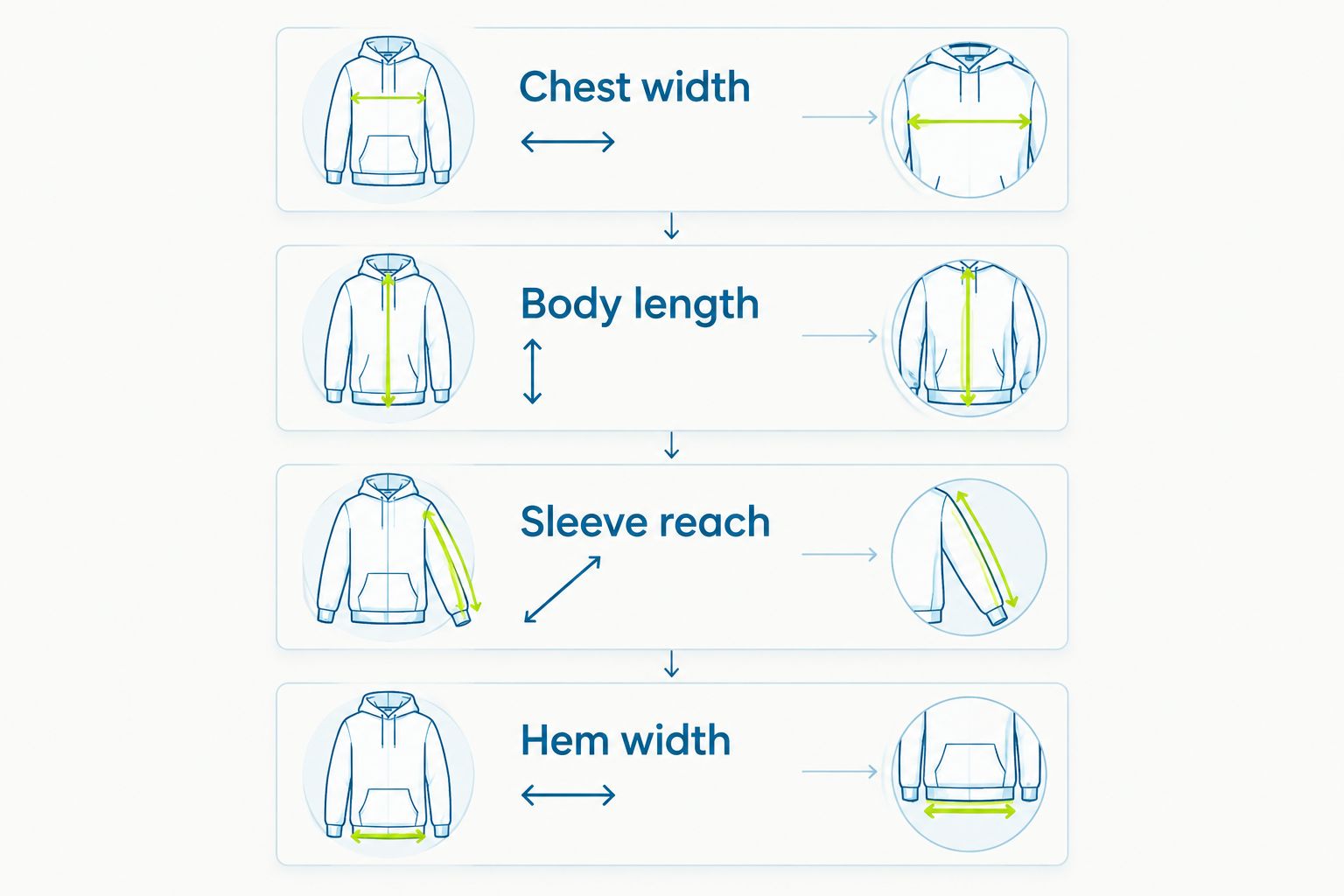
Try your reference hoodie with the intended base layer. Reach forward, raise your arms, and sit down. Write down what fails: pulling at the chest, excessive cuffs, a rising hem, or bunching around the hips. That observation tells you which dimension to change.
HOW THESE FITS ARE RANKED
The ranking prioritizes everyday usefulness first, then distinct fit goals: waist definition, coverage, width, and familiarity. It assesses silhouette trade-offs rather than assigning product scores. No cut wins every category.
The 2026 order puts relaxed drop-shoulder first because it is the clearest general starting point; the other positions answer narrower needs. If coverage matters more than everything else, longline becomes your first choice. Your priority should change the order.
WHICH OVERSIZED HOODIE FIT SHOULD YOU CHOOSE?
Choose relaxed drop-shoulder if you are undecided. Move to cropped boxy for a visible waistline, longline for coverage, or wide boxy for extra torso room without extra length. Size up a regular hoodie only when you want to keep its underlying proportions.
For Rosemchale shoppers, separate the fandom decision from the fit decision. Pick the silhouette and measurements first, then choose the design you want to wear. A graphic cannot correct sleeves or a hem that gets in your way.
FAQ
What's the best oversized hoodie fit for everyday wear?
A relaxed drop-shoulder hoodie is the best starting point for everyday wear in this fit ranking. Check chest width, body length, and sleeve reach before choosing a size.
Is an oversized hoodie the same as buying a larger size?
No. An oversized cut uses its own proportions, while a larger regular size expands the existing pattern. Sizing up can add unwanted sleeve and body length.
Which oversized hoodie fit gives more width without extra length?
A wide boxy hoodie is the most direct choice for more torso width without a longer body. Check the actual length because boxy is a shape description, not a standardized measurement.
What oversized hoodie fit works with high-waisted jeans?
A cropped boxy hoodie is a strong choice when you want the waistband visible. Check the hem while seated and with your arms raised to confirm the coverage suits you.
Should a drop-shoulder hoodie's seam sit below my shoulder?
Yes. A lowered shoulder seam defines a drop-shoulder cut. Judge the cuff position separately, because the seam position alone does not establish the correct sleeve length.
Does heavyweight fabric guarantee a better oversized fit?
No. Fabric weight does not establish chest width, body length, or sleeve dimensions. Assess the garment's measurements and fabric information separately.
How do I compare hoodie size charts that use different units?
Convert both charts to the same unit before comparing them. One inch equals 2.54 centimeters, and garment dimensions must be compared with garment dimensions rather than body measurements.
ONE LAST THING
Check the hem before blaming the chest width. A wide hoodie with a close-fitting ribbed hem gathers fabric above the waistband; a straighter opening lets the body hang differently. If your hoodie feels roomy but looks bunched, adding another size does not directly address that mismatch.