

A Demon Slayer cosplay costume has no single fixed cost: your total depends on the outfit, included accessories, fit, and character details you choose. For a 2026 convention budget, compare the complete wearable look—not just the clothing—and account separately for missing pieces, alterations, delivery, and applicable taxes.
- How much does a Demon Slayer cosplay costume cost? Budget the complete look, not just the outfit.
- Compare Demon Slayer costume sets by included garments, accessories, measurements, and the character version you want.
- Rosemchale serves anime fans shopping for cosplay costumes and streetwear; check each listing’s specific contents before choosing.
- Keep convention admission and travel separate from your costume budget so you can compare outfits fairly.
HOW MUCH DOES A DEMON SLAYER COSPLAY COSTUME COST?
The useful figure is your complete costume total, not the first amount attached to a listing. A garment-only outfit and a costume bundled with accessories are different purchases, even when their photos show a similar finished character.
Start with your character and exact outfit version. Use the Demon Slayer costume order-to-con debut workflow to connect that choice with fitting, preparation, and your event deadline.
Build your estimate around these 5 budget categories. Record each separately so a missing accessory does not disappear inside an apparently complete bundle.
| Budget category | What to include | What to verify |
|---|---|---|
| Main outfit | Character clothing and outer layers | Exact garments included in your selected option |
| Character accessories | Wig, belt, headwear, or other defining details | Whether each item is included or separate |
| Footwear and props | Shoes and any planned handheld accessories | Fit, practicality, and event rules |
| Fitting and preparation | Necessary adjustments, styling supplies, and repairs | What you can handle yourself |
| Order charges | Delivery and applicable taxes or duties | The charges shown for your destination |
Do not assume an accessory belongs to the bundle because a model wears it. Check the written contents for the selected option, then mark each item as included, already owned, or still needed.
WHY THIS MATTERS
Your 2026 cosplay budget needs to describe what you will actually wear. Comparing an outfit without a wig against a set that includes one does not tell you which purchase better fits your plan.
The same distinction applies to detail. If your goal is a recognizable casual look, elaborate finishing is not automatically useful; if you want close-up character portraits, visible details deserve more attention.
Choose the goal before choosing the set. Otherwise, you risk buying a convenient starting point and then replacing the pieces that matter most to you.
Rosemchale sells anime cosplay costumes and streetwear for fans. Treat every costume listing as its own purchase decision: the store’s overall category does not establish a particular outfit’s materials, accessory bundle, or fit.
CHOOSE YOUR BUILD BEFORE COMPARING COSTUMES
There are several ways to assemble a Demon Slayer look. None is automatically the right choice; the useful comparison is how much work and how many separate purchases remain after you choose it.
| Approach | Best for | Main advantage | Main drawback |
|---|---|---|---|
| Ready-made costume set | Fans who want a defined starting outfit | Keeps the main garments together in one purchase | Bundle contents and sizing still need checking |
| Separate-piece build | Fans who already own useful clothing or accessories | Lets you choose and replace individual pieces | Requires more coordination between purchases |
| Custom commission | Fans with specific fit or construction requirements | Lets you discuss requirements before production | Requires an agreed scope, measurements, and schedule |
| DIY build | Fans who enjoy sewing and making accessories | Gives you control over construction and finishing | Adds materials, tools, practice, and your own time |
These are build approaches, not quality rankings. A ready-made outfit still needs a fit check, while a DIY outfit still needs a realistic materials list.
READY-MADE SET: BEST FOR A DEFINED STARTING POINT
A ready-made set gives you a concrete list of garments to assess. Match that list against your reference image rather than judging the purchase from the hero photo alone.
Its limitation is the bundle boundary. If footwear, a wig, or a prop is outside the selected option, those items remain separate decisions even when they appear in the styling.
Choose a set when its included pieces match your plan. Do not choose it solely because the product title uses the words complete or full set.
SEPARATE PIECES: BEST FOR USING WHAT YOU OWN
A separate-piece build makes sense when you already have suitable basics or want to prioritize specific details. Inventory your wardrobe before creating a shopping list.
The drawback is coordination. Check color, proportions, fastening methods, and how the layers sit together; individually suitable pieces still need to work as one outfit.
CUSTOM COMMISSION: BEST FOR SPECIFIC REQUIREMENTS
A commission lets you describe fit, construction, and detail requirements directly to a maker. Put those requirements in writing before accepting a quote.
Clarify what the quote covers, including accessories, fitting adjustments, and delivery arrangements. Compare agreed deliverables, not the word custom. The label alone does not describe the finished garment.
DIY BUILD: BEST FOR MAKERS WHO WANT CONTROL
A DIY costume gives you control over fabric selection, construction, and finishing. Start with the parts you know how to make, then identify the techniques you need to learn.
The trade-off is your time and equipment. Include patterns, fastenings, thread, adhesives appropriate to the materials, and any tools you do not already own; fabric alone is not the full project.
WHY A DEMON SLAYER COSPLAY BUDGET VARIES
The biggest differences come from the scope of the look and what the purchase actually contains. For your 2026 comparison, keep these factors consistent across the outfits you consider:
- Character version: Choose one reference outfit so you are not comparing different garments or accessory needs.
- Included components: Separate the main clothing from wigs, footwear, headwear, and props.
- Materials and construction: Compare the stated fabric, lining, closures, and finishing rather than assuming the photos establish quality.
- Fit requirements: Check whether the measurements match you and identify any adjustments before committing.
- Preparation and delivery: Account for styling supplies, necessary repairs, delivery charges, and applicable taxes shown during ordering.
A longer product title is not evidence of a more complete costume. Likewise, a detailed reference photo does not establish the fabric composition or construction of the item being sold.
Use written specifications to decide what you are buying. Use photos to inspect appearance, then resolve any contradiction before ordering.
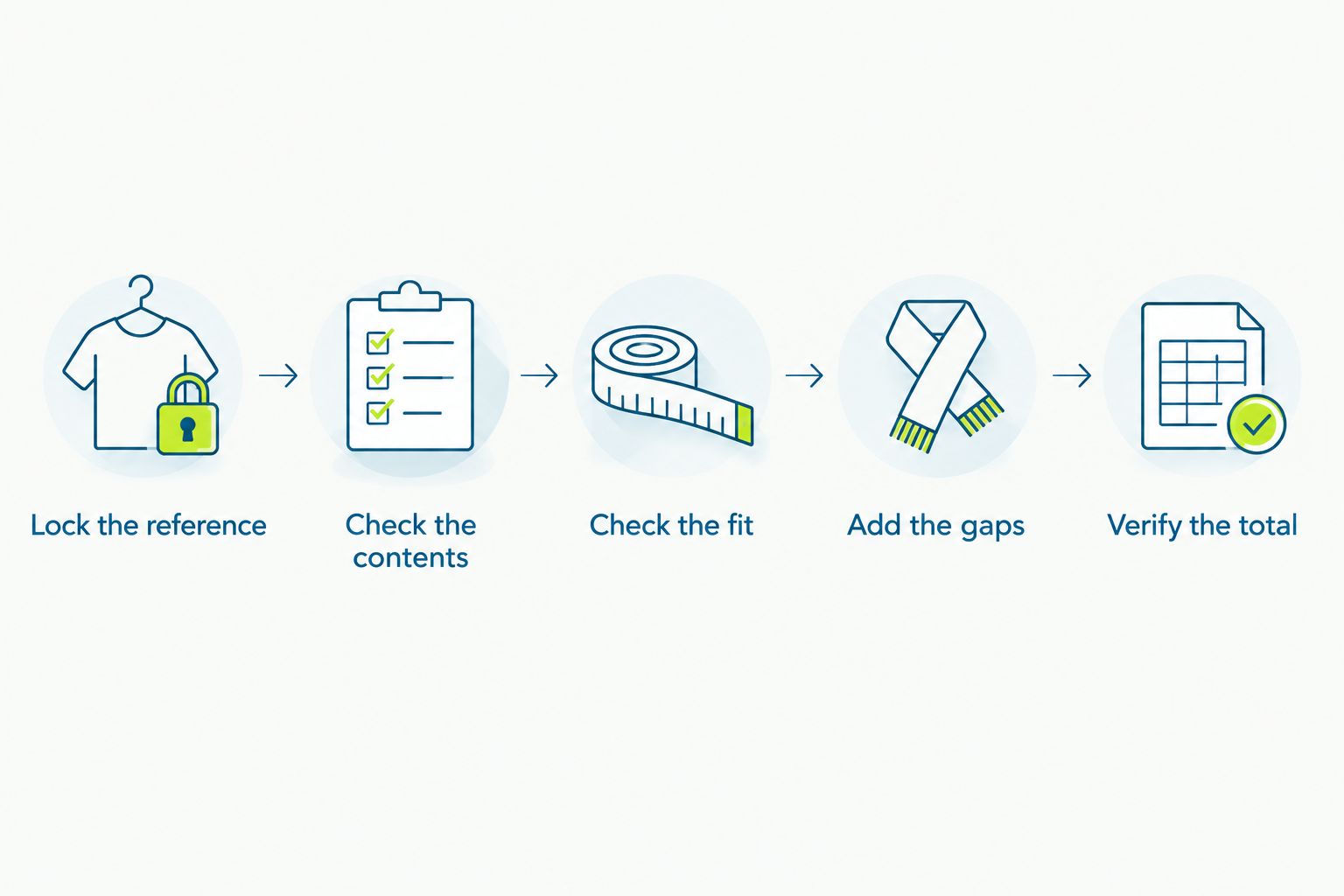
BUILD YOUR 2026 COSTUME BUDGET IN ORDER
Keep one worksheet for the complete look. A simple list works as long as it distinguishes what you own from what you still need.
1. LOCK THE REFERENCE
Save a clear reference showing the outfit version you want. Identify the silhouette, outer layer, hairstyle, footwear, and defining accessories before browsing alternatives.
Do not mix details from different looks unless that is intentional. A fixed reference stops your shopping list from changing every time another costume catches your attention.
2. CHECK THE CONTENTS
Copy the selected option’s written contents into your worksheet. Match every garment and accessory against your reference, and flag anything that is not explicitly included.
Product options matter. Read the contents again after selecting the bundle or variation you intend to order rather than relying on the page’s first image.
3. CHECK THE FIT
Compare your measurements with the listing’s size chart. For a fitted outfit, begin with 3 body measurements—chest or bust, waist, and hips—then check garment-specific dimensions such as sleeve or trouser length.
Find out whether the chart describes body measurements or finished garments. Those are different measurements, and confusing them makes the size comparison unreliable.
4. ADD THE GAPS
List only the missing pieces you actually intend to wear. Separate essential character details from optional additions so you can simplify deliberately if needed.
Then add preparation supplies and any adjustments you have identified. Do not treat an uncertain alteration as free just because you have not asked who will do it yet.
5. VERIFY THE TOTAL
Review the selected outfit, missing pieces, preparation work, and order charges together. Keep convention tickets, travel, and accommodation in a separate event budget.
If you compare 2 quotes, give both the same scope. A quote that omits the wig and footwear cannot be compared directly with one that includes them.
CHECK FIT BEFORE YOU PAY FOR DETAIL
A costume needs to work when you sit, walk, and raise your arms—not only when you stand for a photo. Before choosing a size, think about the movements your event day requires.
Measure over any base layer you intend to wear. Keep the tape level and follow the seller’s measuring instructions; do not substitute your usual clothing label for the costume’s actual chart.
For your 2026 fitting plan, inspect the closures, waist placement, sleeve length, and any attached accessories. If a measurement conflicts with another, ask about that specific conflict instead of guessing that a larger size solves everything.
A larger garment does not automatically fix every proportion. Buy for the measurements you can verify, then assess the adjustments separately.
HOW DO YOU KEEP THE COSTUME BUDGET UNDER CONTROL?
Keep the costume budget under control by protecting the defining outfit details and removing optional purchases first. Write down what makes your chosen version recognizable before adding accessories.
Use what you already own when it fits the reference and your comfort needs. Do not replace a suitable item merely to make every piece part of the same order.
Avoid buying a prop before checking your event’s current rules. The same check applies to dimensions, materials, and how the prop must be carried; use the actual event policy rather than another attendee’s assumptions.
DOES A FULL SET INCLUDE EVERYTHING YOU NEED?
A full set includes only the components specified for the option you select. The phrase does not establish whether the purchase includes a wig, footwear, props, or styling accessories.
Check the written component list against the photo. If the two leave an important detail unresolved, ask what is included before placing the order.
IS A MORE DETAILED COSTUME THE BETTER CHOICE?
A more detailed costume is the better choice only when those details serve your intended use. Close-up photography, casual attendance, and a performance place different demands on the outfit.
For a 2026 convention, assess movement and wearability alongside appearance. Extra detail does not replace correct measurements, secure closures, or a costume you can comfortably manage.
FAQ
How much does a Demon Slayer cosplay costume cost in 2026?
A Demon Slayer cosplay costume has no single fixed total; calculate the selected outfit, missing accessories, fitting work, and order charges together. Compare purchases with the same included components rather than treating every costume listing as equivalent.
What should I include in a Demon Slayer cosplay budget?
Include the main outfit, planned accessories, footwear, props, preparation work, delivery, and applicable taxes. Keep convention admission and travel separate so your costume comparison stays clear.
Is buying a full costume set better than buying separate pieces?
A full set is best for a defined starting outfit, while separate pieces suit fans who already own useful items or want individual control. Check bundle contents either way; neither approach guarantees fit or completeness.
Do I need a wig for Demon Slayer cosplay?
You need a wig only if it is part of the look you want and you are not using your own hair. Treat it as a separate budget item unless the selected costume option explicitly includes it.
How do I choose the right cosplay costume size?
Choose the size by comparing your measurements with the costume’s own chart. Check whether the chart uses body or garment measurements, then review sleeve, trouser, or dress dimensions relevant to the outfit.
Can I use shoes and accessories I already own?
Yes, use existing shoes and accessories when they suit your chosen look and event needs. Mark them as already owned in your worksheet instead of adding unnecessary replacements.
Does Rosemchale sell anime cosplay costumes?
Rosemchale sells anime cosplay costumes and streetwear apparel for fans. Check individual listings for the exact character, included components, materials, and sizing rather than assuming every costume has the same specifications.
ONE LAST THING
Photograph your planned outfit as a flat lay before declaring the budget finished. Put the clothing, footwear, wig, and intended accessories together, then compare that arrangement with your reference.
For your 2026 debut, an empty space in that layout is a better prompt than another browsing session. Decide whether the missing piece is essential, optional, or already handled—and buy only what the finished look actually needs.