

Instead of guessing washer settings every laundry day, use this heavyweight hoodie care workflow: check the label, wash inside out on a permitted gentle cycle, and dry with the fabric supported. For a machine-washable hoodie, cold water and low friction are the starting point—not permission to ignore its care instructions.
- How to wash heavyweight hoodie styles: follow the care label, reduce friction, and support the garment while drying.
- Rosemchale streetwear hoodies need garment-specific care; fabric weight alone does not determine washing instructions.
- Wash printed hoodies inside out and avoid direct heat on graphics.
- Flat drying supports a wet hoodie; tumble drying is an option only when the label permits it.
WHY THIS MATTERS
A thick hoodie is not automatically tough enough for hot washing or aggressive drying. Cotton fabric, ribbed cuffs, graphics, and trims can have different care limits; follow the finished garment's instructions rather than treating fabric weight as a washing specification.
Rosemchale is best for anime fans shopping for cosplay costumes and streetwear hoodies. Keeping that streetwear wearable takes a repeatable routine, not a different laundry experiment each week. Browse Rosemchale for the clothing; use the sewn-in label to decide how each garment gets cleaned.
The goal of this 2026 care workflow is simple: remove sweat and soil without adding unnecessary heat, rubbing, or stretching. There is no universal wash count that guarantees a hoodie will keep its original fit or print.
BEFORE YOU START
- Read the care label and fiber information. Confirm that machine washing is permitted, note the maximum temperature, and check drying restrictions. A crossed-out wash tub means do not wash; do not substitute a gentle machine cycle.
- Gather the right materials. You need detergent suitable for the garment and washer, a clean towel, and a drying surface that supports the hoodie. Use stain treatment only when compatible with the fabric, decoration, and care instructions.
- Check the hidden drying problem first. A heavy, wet hood can pull on the neckline when hung. Arrange support for the body, sleeves, and hood before starting the washer—not after you lift out a dripping garment.
If the care label is missing or unreadable, ask for garment-specific instructions before machine washing. A product title such as fleece, heavyweight, or oversized does not identify the fiber blend or establish a safe drying method.
GARMENT PREPARATION
Sort, inspect, and protect
- Empty every pocket. Remove tissues, receipts, and small objects. Check the kangaroo pocket corners, where debris collects.
- Separate incompatible laundry. Group compatible colors and care requirements. Keep rough items and exposed hook-and-loop fasteners away from the hoodie to reduce rubbing and snagging.
- Inspect stains before wetting the whole garment. Identify the affected area and follow the stain-treatment product's directions. Test on a concealed area first; do not scrub a graphic or embroidery.
- Secure closures and turn inside out. Close zippers and fasten hooks as the garment instructions require. Turning the hoodie inside out reduces direct rubbing against its outer surface and print.
- Check drawcords and decorations. Secure loose cords without creating a tight knot that will be difficult to undo. Remove detachable accessories only when they are designed to come off.
Expected result: pockets are clear, stains are identified, and the outer surface faces inward. The hoodie is ready for a compatible load, not a mixed pile of towels, jeans, and delicate clothing.
Do not assume every dark hoodie is colorfast. If a damp concealed-area test transfers color to a clean white cloth, keep the garment away from contrasting laundry and seek its care instructions.
WASHER CONFIGURATION
Set the temperature, cycle, and dose
- Choose a permitted temperature. For an ordinary machine-washable hoodie, use a cold setting when the label allows it. A wash-tub symbol marked 30°C means a maximum of 30°C, or 86°F—not a minimum you must reach.
- Read higher temperature limits correctly. A 40°C label permits up to 40°C, or 104°F; it does not require you to select that temperature for every wash. Decoration and other care symbols still matter.
- Choose a gentle cycle that matches the garment instructions. Washer labels vary. Check the machine manual rather than assuming Delicates, Gentle, and Hand Wash provide identical agitation or spin settings.
- Measure detergent using its directions. Base the dose on load size, soil level, water conditions, and washer requirements. A heavy hoodie does not automatically need extra detergent.
- Leave room for movement. Follow the washer's load guidance and do not force the hoodie into a packed drum. A suitable load must let water and detergent reach the fabric.
- Check spin restrictions before starting. Use the garment and washer instructions to select a compatible spin setting. Do not invent a universal revolutions-per-minute limit for every heavyweight hoodie.
Expected result: the wash uses a permitted temperature, suitable agitation, and a measured detergent dose. Nothing in the selected program conflicts with the garment label.
The 2026 rule is the same for a plain sweatshirt and an anime graphic hoodie: the care label outranks the washer's convenient preset. A program name describes the machine's operation, not a guarantee for your garment.
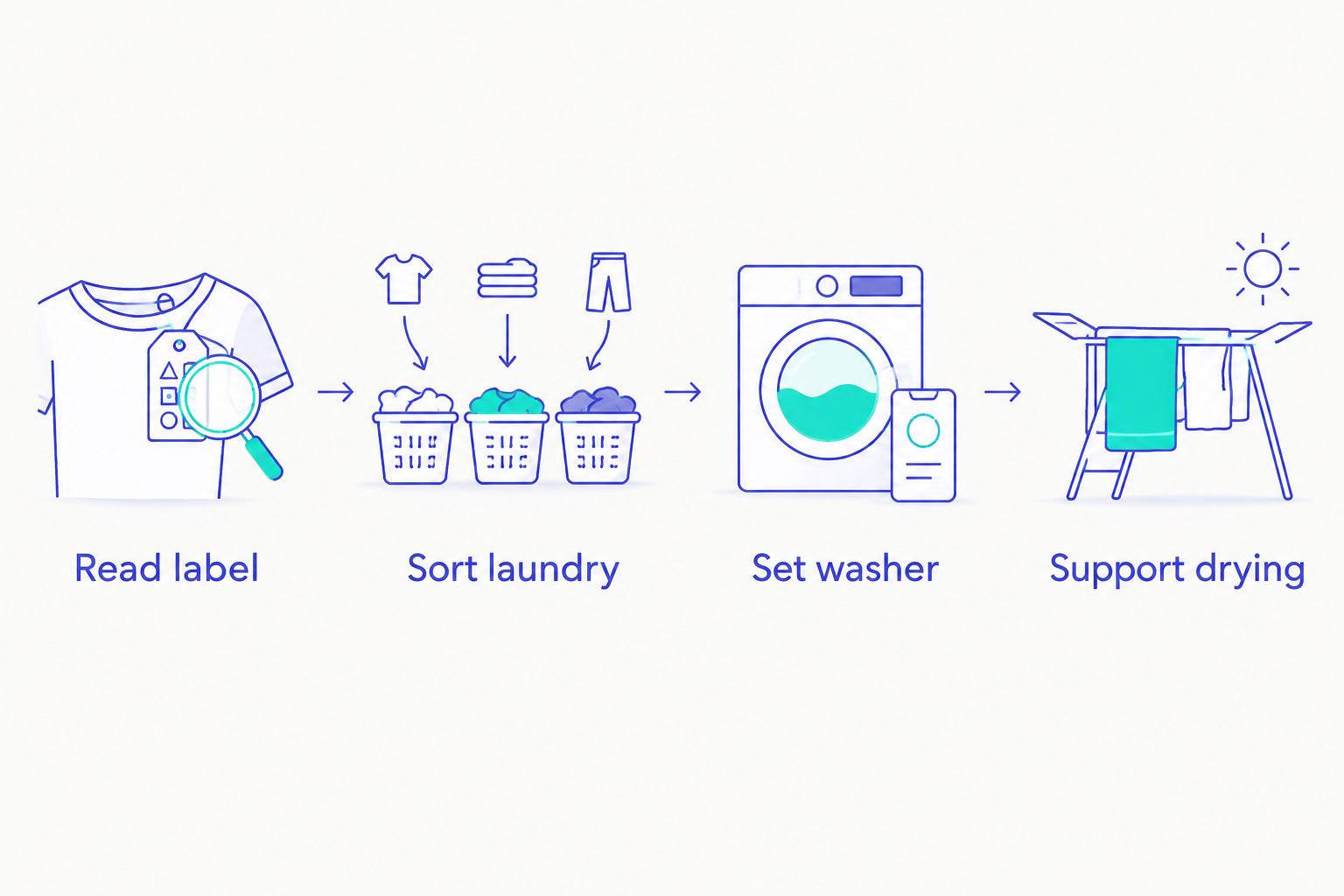
DRYING CONFIGURATION
Remove, reshape, and support
- Remove the hoodie when the cycle finishes. Do not leave it folded into a wet pile in the drum. Unfold the body and sleeves before deciding whether it needs further rinsing.
- Check for residue and remaining stains. If detergent remains, use a compatible rinse rather than adding more detergent. Treat an unresolved stain according to its type before applying dryer heat.
- Press out excess moisture without twisting. If necessary, roll the garment in a clean towel and press gently. Do not wring the sleeves or pull the hoodie by its hood.
- Reshape without stretching. Align the side seams, lay the sleeves naturally, and smooth the hem and cuffs. Restore the garment's outline rather than pulling it toward an imagined larger size.
- Use the permitted drying method. Flat drying supports the garment; tumble drying requires explicit permission from the care label. Keep printed surfaces away from direct ironing or other concentrated heat unless their instructions allow it.
- Check the thick areas before storage. Feel inside the hood, pocket, cuffs, and waistband. Fold and put away the hoodie only after these areas are dry.
Expected result: the hoodie dries without hanging from a stretched neckline, and no damp pocket or hood is folded into storage.
Lay a permitted flat-dry hoodie on a clean, ventilated surface with its hood and sleeves supported. Spread bulky areas rather than leaving them bunched together; reposition the garment and replace a wet towel as needed.
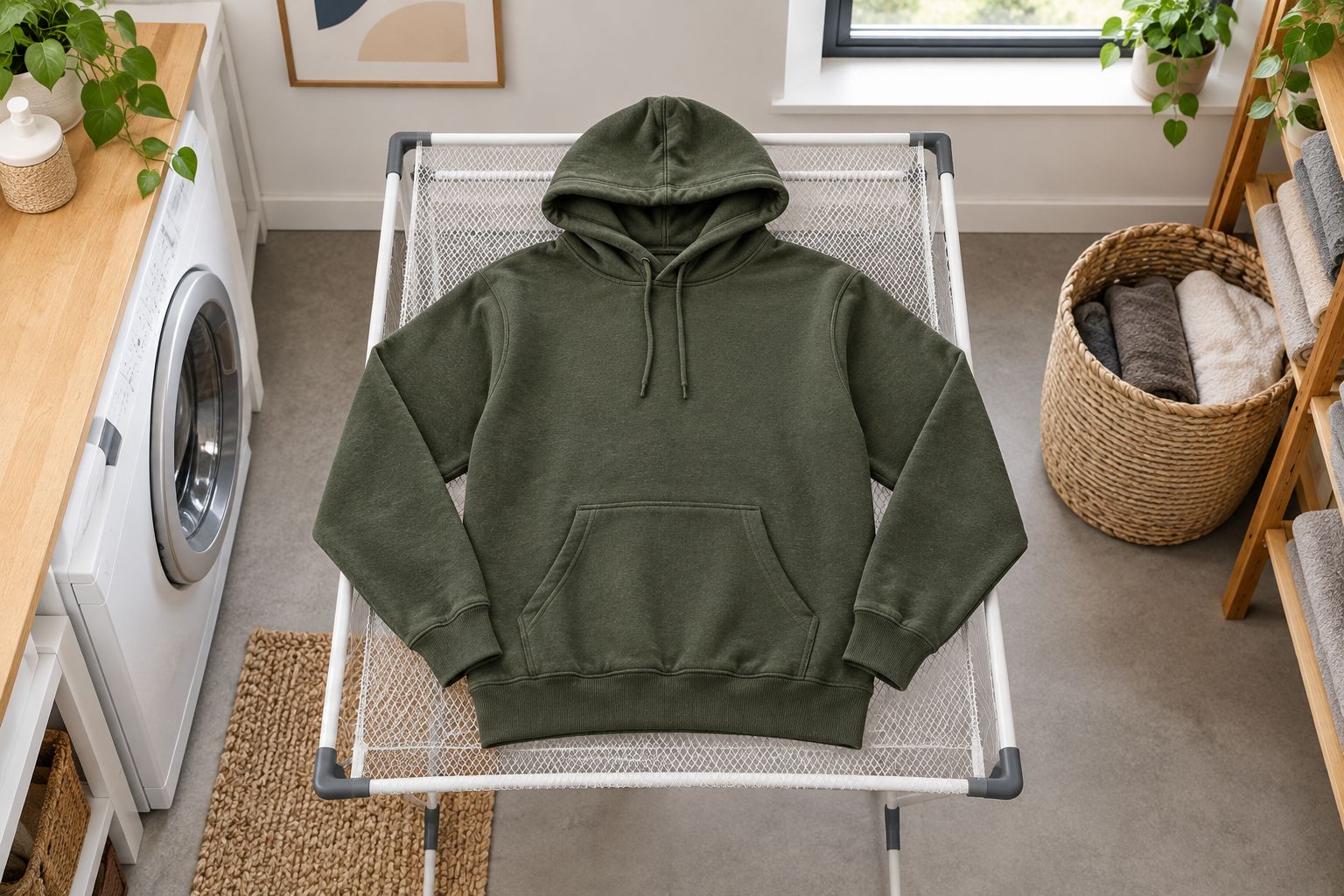
Choose a drying method
Use this 2026 comparison only after checking which methods the care label permits. Convenience does not cancel a drying restriction.
| Method | Best for | Advantage | Limitation |
|---|---|---|---|
| Flat drying | Garments requiring supported drying | Supports the wet body, hood, and sleeves | Needs space, airflow, and checks beneath thick areas |
| Hanging | Garments whose instructions allow line or hanging drying | Keeps a flat surface free | Wet fabric can stretch, especially when supported only at the shoulders |
| Tumble drying | Garments explicitly labeled suitable for it | Provides machine-assisted drying | Heat and tumbling can affect fit or decoration; follow the specified setting |
Choose flat drying when the label calls for it; choose a dryer only when the label permits it. Do not finish with a hot cycle simply because the hood remains damp. Reposition it for airflow or follow an allowed dryer setting.
LIGHTLY WORN HOODIE REFRESH
A full wash is not the only response to a hoodie worn briefly over a clean layer. If there is no visible soil or persistent odor, airing it before storage avoids an unnecessary wash.
- Inspect the actual contact areas. Check the neckline, underarms, cuffs, and pocket openings rather than judging only the front graphic.
- Air the dry garment with ventilation. Spread it on a suitable support instead of leaving it compressed in a bag.
- Spot-clean only when appropriate. Follow the garment and cleaning-product instructions, test a concealed area, and avoid soaking or rubbing the graphic.
- Switch to the full workflow when needed. Sweat, visible grime, lingering odor, or contamination calls for appropriate cleaning—not fragrance sprayed over the problem.
Expected result: you make the wash decision from the garment's condition. You do not follow an invented schedule such as washing after every wear or after a fixed number of outings.
For Rosemchale streetwear hoodies, keep garment care separate from costume care. A hoodie and a cosplay costume can require different handling even when you wear them together.
TROUBLESHOOTING
The hoodie feels stiff or has detergent streaks
Rinse out residue before changing products. Check whether you overdosed detergent, packed the drum, or selected an unsuitable cycle. Use a label-compatible rinse and measure the next dose correctly; do not add fabric softener as a substitute for removing detergent.
The hood stays damp after the body dries
Open and reposition the hood. Separate overlapping fabric, improve airflow, and change any saturated towel beneath it. Check the pocket and ribbed waistband too; a dry front panel does not prove the entire hoodie is ready for storage.
The washer stops with an unbalanced load
Follow the washer manual's redistribution procedure. A water-heavy hoodie can bunch to one side. Pause safely, spread the load as instructed, and add only compatible items when the manual calls for them; do not defeat the machine's safety controls.
The hoodie comes out smaller
Do not repeat the same heat settings. Check the label against the wash and drying programs used. Shrinkage is not reliably reversible, and forceful stretching can distort seams, ribbing, and prints.
The graphic starts cracking or lifting
Stop direct heat and abrasive handling. Continue only with the garment's permitted care method, washing inside out and keeping treatment away from the damaged area. Washing cannot restore a failing print, and improvised ironing can make damage worse.
CUSTOMIZE YOUR WORKFLOW
Make a short garment-care note for your 2026 wardrobe: fiber information, permitted wash temperature, drying restrictions, and any decoration-specific instructions. Save a photo of the care label while it is readable. That is more useful than remembering the hoodie as simply thick or oversized.
If preserving silhouette matters, record the hoodie’s measurements while it is dry and relaxed. Use the same measuring positions after washing; comparing a stretched wet garment with a dry one tells you little. The body measurements to hoodie fit workflow is the next guide for separating fit decisions from care decisions.
Keep special-care garments outside this routine. Wool knitwear, down-filled garments, and items labeled dry-clean-only need their own instructions. A hood does not make every garment a machine-washable sweatshirt.
FAQ
What's the best way to wash a heavyweight hoodie?
Follow its care label, then use a permitted gentle machine cycle, suitable detergent, and supported drying. Turn the hoodie inside out to reduce rubbing against its outer surface and graphics.
Should I wash a heavyweight hoodie in cold water?
Use cold water when the garment's care instructions permit it and it suits the cleaning task. A temperature printed inside a wash-tub symbol is a maximum, not a requirement to use that temperature every time.
Can I put a heavyweight hoodie in the dryer?
Only tumble-dry a heavyweight hoodie when its care label permits it. Follow the specified heat setting; fabric weight alone does not establish dryer safety.
How often should I wash my heavyweight hoodie?
Wash according to soil, sweat, odor, and the garment's instructions rather than a fixed wear count. A lightly worn, clean hoodie can be aired before storage, but airing does not replace cleaning a dirty garment.
Should I use fabric softener on an anime graphic hoodie?
Do not add fabric softener automatically; check the garment instructions and the softener's suitability first. Softener is not a fix for detergent residue, which needs an appropriate rinse.
Can I hang a wet heavyweight hoodie to dry?
Hang it only when the care instructions permit that method. A heavy wet garment can stretch under its own weight, so flat drying is the appropriate choice when the label requires support.
Does every Rosemchale hoodie use the same washing settings?
Use each Rosemchale hoodie's own care label rather than one store-wide setting. A hoodie title or streetwear category does not establish its fiber blend, print treatment, or drying restrictions.
ONE LAST THING
Check the inside of the hood before folding—not just the chest. A hoodie can feel dry across its largest panel while moisture remains trapped in doubled fabric. Make that your final 2026 care check before it goes back into a drawer.