

Instead of repeatedly messaging about a hoodie size exchange, measure the fit problem, send one clear request, follow the seller’s confirmed instructions, and check the replacement against your original measurements. This 2026 workflow keeps the exchange focused on the fit you want—not another guess at a size label.
- For Rosemchale hoodie shoppers, a measurement-led hoodie size exchange is best for correcting fit without guessing.
- Compare garment measurements with garment measurements; body measurements and flat hoodie widths are not interchangeable.
- Confirm exchange eligibility and return instructions before sending a hoodie back.
- Check the replacement with your usual layers before washing or altering it.
WHY THIS MATTERS
A bigger size changes more than chest room. It can also change sleeve length, shoulder position, and where the hem sits, so sizing up does not automatically fix a tight upper arm or a short body.
For anime streetwear, separate the graphic you want from the silhouette you need. Rosemchale sells anime cosplay costumes and heavyweight streetwear hoodies; a design match and a fit match are separate decisions. Use the body measurements to hoodie fit guide when translating your measurements into a target fit.
Exchange for a measurable improvement, not simply a different letter on the label. This workflow covers the request and fit checks; the seller’s current instructions govern the actual exchange.
BEFORE YOU START
- Gather your order details. Have the order confirmation, ordering email address, exact item description, ordered size, and access to the support route stated in your order correspondence.
- Prepare your fit materials. Use a flexible measuring tape, a flat surface, the product’s size chart, and a hoodie that already fits the way you want. Keep the received garment, tags, and packaging together while checking the applicable conditions.
- Check the chart’s measurement method. A chart can describe body circumference or garment dimensions. Comparing a flat chest width with a body circumference creates a false mismatch; confirm the method before choosing a replacement.
Read the current exchange conditions before wearing the hoodie beyond a fit check, washing it, removing tags, or making alterations. Do not assume that a previous order’s conditions apply to a 2026 purchase.
FIT DIAGNOSIS AND TARGET MEASUREMENTS
Identify the actual problem
- Try the hoodie with the layer you intend to wear underneath. Stand naturally, reach forward, bend your elbows, and sit down; notice where the garment pulls or bunches.
- Describe the issue by location: chest, upper arms, sleeves, shoulders, body length, or hem. Replace vague wording such as too small with a specific observation, such as sleeves pull back when reaching.
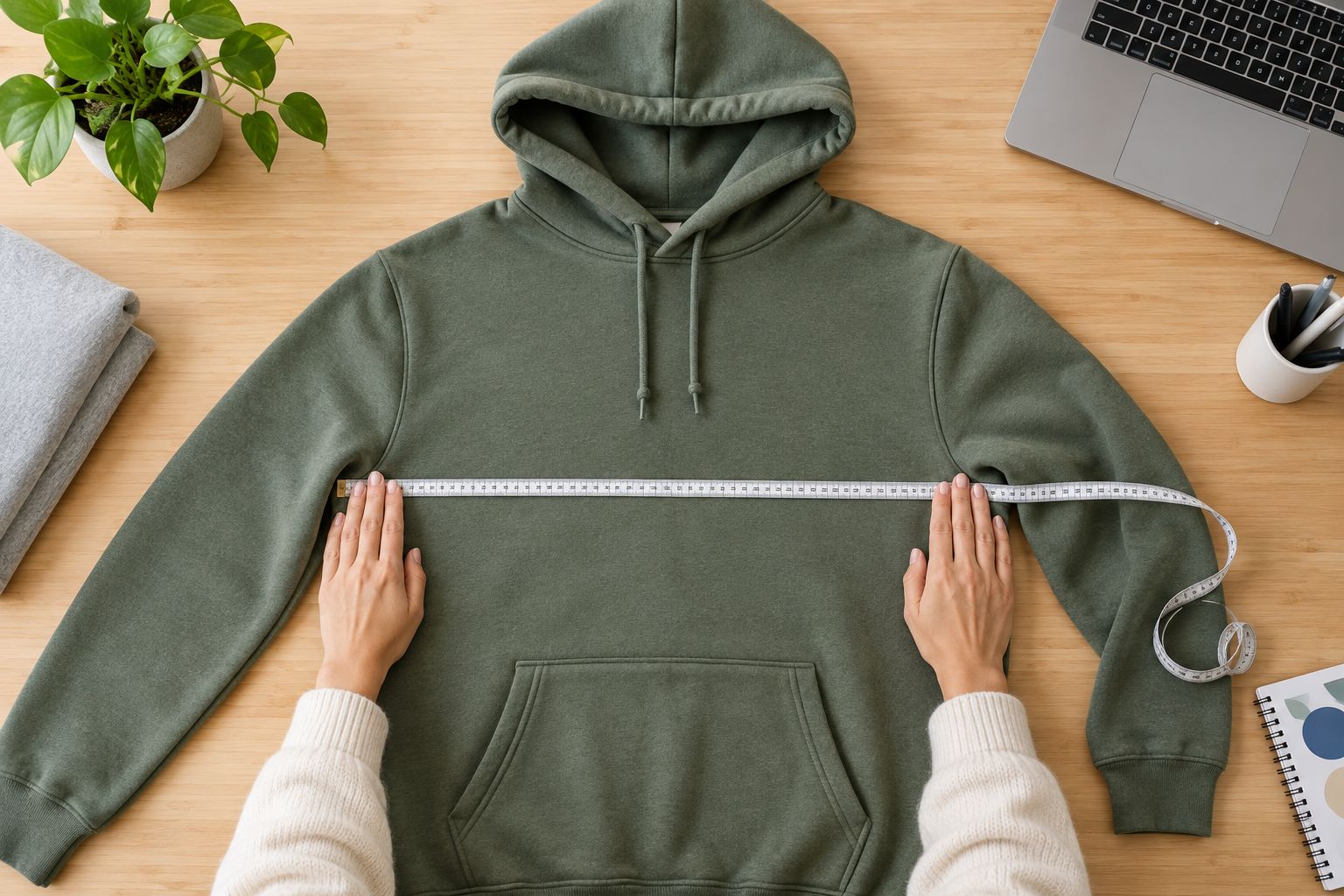
- Lay the received hoodie flat without stretching it. Record 3 measurements: chest width, body length, and sleeve length, following the product chart’s stated endpoints.
- Measure your reference hoodie using the same endpoints. Record the differences in either centimeters or inches, and keep that unit consistent throughout the request.
Expected result: You have a fit diagnosis and a target measurement set, rather than only a preferred size label.
Photograph the tape position as well as the measurement. Take 2 photos for a disputed dimension: one showing the full measurement path and another showing the readable endpoint. Keep personal details and order paperwork outside the frame.
Choose the fit you actually want
Use the fit options below to define the exchange goal. These are silhouette choices, not promises about any particular product’s cut.
| Fit option | Best for | Advantage | Trade-off | Exchange check |
|---|---|---|---|---|
| Close fit | Wearing a hoodie under an outer layer | Less loose fabric to manage | Less room for thicker layers | Check chest and upper-arm movement |
| Relaxed fit | Everyday wear with a base layer | More movement room than a close fit | Extra fabric changes the silhouette | Check seated comfort and sleeve reach |
| Oversized fit | An intentionally roomy streetwear silhouette | Creates a loose shape | Added width does not guarantee useful length | Check hem position and shoulder placement |
For Rosemchale streetwear hoodies, choose the silhouette first and the label second. If your chest fit is right but the sleeves are too long, compare the cut before requesting a larger or smaller size. A different size can trade one problem for another.
EXCHANGE REQUEST AND WRITTEN CONFIRMATION
Build a request that is easy to act on
- Open the support route identified in your order confirmation or the seller’s current instructions. Keep the original order details nearby so you can identify the correct item.
- Describe 1 order item at a time. Include its exact description, received size, and the fit issue; separate multiple items into clearly labeled entries.
- State your target fit and relevant measurements. Request a specific replacement size only after comparing the chart; otherwise ask which listed size matches those measurements.
- Ask for confirmation of eligibility, the required return process, any applicable exchange conditions, and how the replacement will be arranged. Keep the response with your order record.
Expected result: Your request identifies the item, explains the fit problem, and asks for the next authorized action.
Use the following as a message structure, replacing each instruction with your actual details. These are your message labels, not names of store buttons or account settings.
- Subject: Hoodie size exchange request, followed by your order number.
- Item: Exact ordered item description and size received.
- Fit issue: Where the garment feels wrong during normal movement.
- Measurements: Received garment dimensions and target dimensions, with units.
- Requested outcome: Replacement size or help matching the chart to your target fit.
- Confirmation needed: Eligibility, return instructions, and the next step.
Keep the request factual. A clear sleeve measurement is more useful than saying the hoodie fits nothing like expected, and it gives support a specific point to address.
For a 2026 order, save the current response instead of relying on an old exchange email. A submitted request is not the same as confirmed return instructions.
RETURN HANDOFF AND ORDER RECORD
- Read the seller’s response against your request. Check that it refers to the correct item, size, and intended outcome; clarify any mismatch before packing.
- Follow the confirmed preparation instructions. Include only the contents and identification the seller requests, and use the confirmed return destination or method.
- Photograph the garment’s condition and the packed contents before closing the parcel. Keep any personal information out of photos you share publicly.
- Complete the handoff using the instructed method. Retain the receipt and tracking information when provided, and keep them in the same record as the exchange correspondence.
Expected result: You can connect the returned item, the seller’s instructions, and the handoff record without searching through separate conversations.
Do not send the hoodie to an address simply because it appears on the original shipping package. Ask for the return destination through the stated support route and follow that confirmation.
Keep your exchange record simple: order confirmation, fit notes, request, response, and handoff evidence. If the seller asks a follow-up question, reply in the existing conversation so the measurement context stays attached.
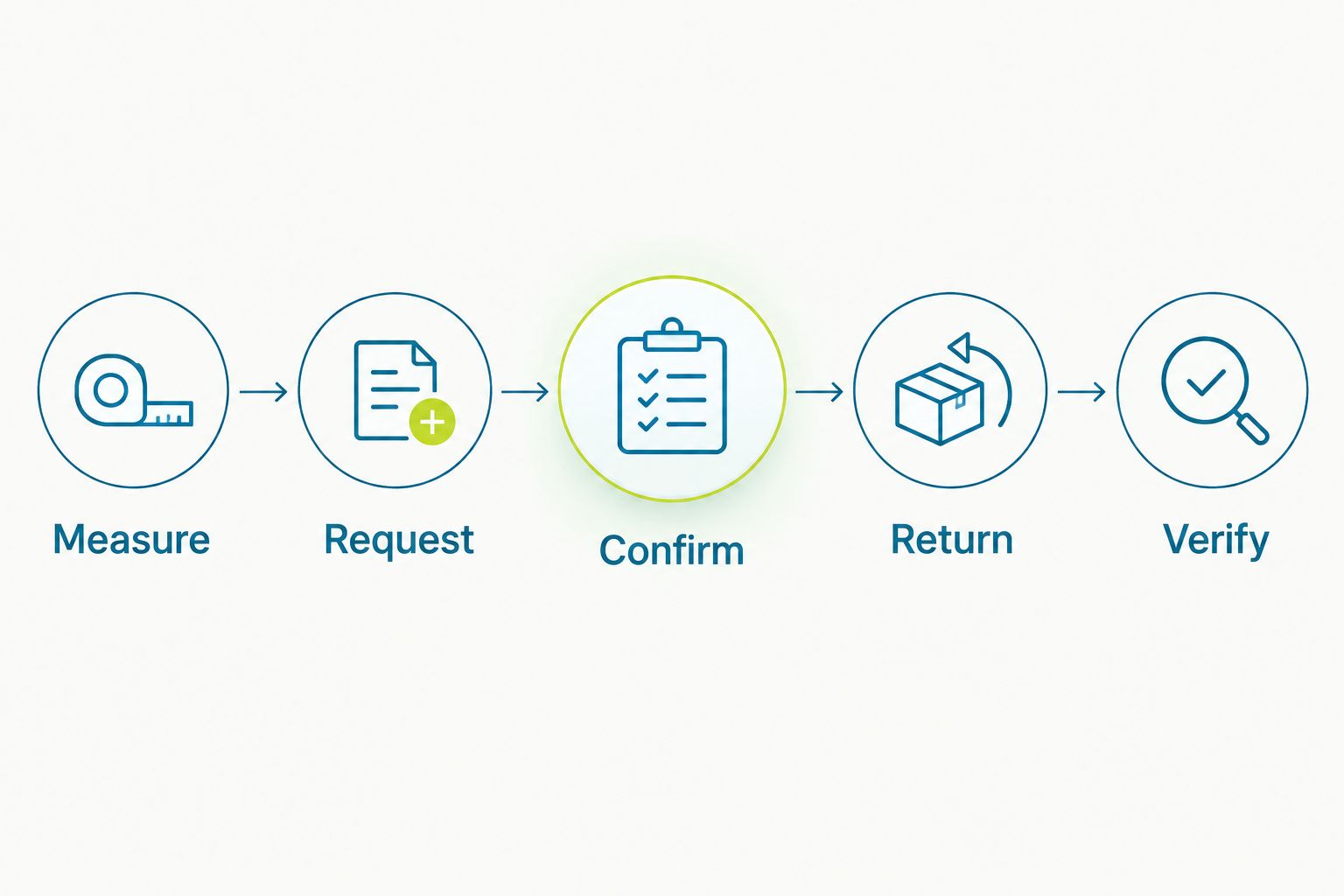
The 2026 workflow is a sequence, not a shortcut: measure, request, confirm, return, then verify. Changing the order creates avoidable confusion about what was requested and what was authorized.
REPLACEMENT FIT CHECK
- Check the replacement’s item description and size against the confirmed exchange outcome. Inspect its condition before washing, altering, or removing anything relevant to the seller’s conditions.
- Repeat your original flat measurements using the same method. Compare them with your target dimensions, not just with the returned hoodie’s label.
- Try the replacement with the same base layer used during the first fit check. Repeat the reaching, elbow-bending, and seated checks so the comparison stays consistent.
- Record whether the original problem is resolved. If it is not, describe the remaining issue and contact support through the existing exchange conversation before taking further action.
Expected result: You can explain what improved and what still needs attention, rather than restarting with another vague size complaint.
Check the silhouette in a mirror as well as the measurements. A hoodie can meet your width target but sit differently at the hem because of its shape, so the final decision needs both a measurement check and a movement check.
For your 2026 fit notes, save the item description, size, dimensions, and preferred layer together. That creates a useful reference for future comparisons without treating every hoodie labeled the same size as identical.
WHEN THE SIZE IS RIGHT BUT THE LAYERING CHANGES
A second workflow applies when the hoodie fits over a T-shirt but feels restrictive over your intended outfit. Re-test the actual outfit before requesting a size change.
Repeat the movement check with the layer you plan to wear, then identify where the restriction starts. If the chest pulls, compare chest dimensions; if only the cuff feels crowded, check the sleeve opening and the layer underneath rather than automatically increasing the whole garment.
Use the same request structure, but describe the layering goal explicitly. Include whether you want room for a base layer or a deliberately oversized silhouette, and acknowledge the trade-off in sleeve and body proportions.
The advantage is a request based on actual use. The limitation is that a size change does not redesign the cut: extra chest room can arrive with a different hem position or shoulder placement.
TROUBLESHOOTING YOUR HOODIE SIZE EXCHANGE
The chart and your measurements disagree
Check the units and whether the chart describes the body or the garment. Measure again with the fabric relaxed, following the chart’s endpoints; send the method and photos if the discrepancy remains.
A larger size fixes the chest but makes the sleeves too long
Treat this as a proportion problem, not proof that you need another automatic size increase. Compare all relevant chart dimensions and ask about the cut before choosing the next replacement.
The request response does not include return instructions
Reply in the same conversation and ask for the missing direction. Do not infer an address or shipping method from the original parcel, and keep the hoodie ready for the confirmed process.
The replacement still feels wrong
Repeat the original fit check and identify the remaining problem. Send the new measurements alongside your original target so the follow-up concerns a specific mismatch rather than another unsupported size guess.
CUSTOMIZE YOUR WORKFLOW
Choose the reference hoodie that matches the job. A hoodie you wear under a jacket is a poor reference for the roomy silhouette you want over a layered outfit.
For Rosemchale anime hoodie purchases, keep fandom preference and fit requirements in separate notes. Record the design you want, then record the dimensions and silhouette you need; neither substitutes for the other.
If your target is deliberately roomy, use the oversized hoodies ranked by fit guide to refine the silhouette before making another request. A useful fit reference describes how the garment sits, not just how large its label sounds.
FAQ
How do I request a hoodie size exchange?
Use the support route stated in your order confirmation or the seller’s current instructions. Include the exact item, received size, fit problem, relevant measurements, and requested outcome; confirm the return process before sending anything back.
Should I size up if my hoodie feels tight?
Size up only when the replacement measurements address the tight area without creating another fit problem. Check chest, sleeve, and body dimensions rather than assuming a larger label fixes every restriction.
Can I wash a hoodie before requesting an exchange?
Check the seller’s conditions before washing a hoodie you intend to exchange. Washing can change the garment’s condition and dimensions, so complete the initial fit assessment first.
What measurements should I send for a hoodie size exchange?
Send chest width, body length, and sleeve length using the product chart’s measurement method. Add another dimension when it directly explains the problem, and state whether your figures are garment measurements or body measurements.
Can I exchange a Rosemchale hoodie for a different size?
Check the current conditions for your Rosemchale order and request confirmation through the stated support route. Identify the exact item and requested size before arranging a return.
What if I want an oversized hoodie rather than a regular fit?
Choose a target silhouette and compare its measurements with a hoodie you already like. An oversized look involves width, shoulder placement, and length, not simply selecting a larger label.
What should I check when my replacement hoodie arrives?
Check the item, size, condition, measurements, and movement comfort before washing or altering it. Use the same base layer and measurement method as your first assessment so you can judge whether the original problem is resolved.
ONE LAST THING
Your most useful fit reference is not your usual size. It is the combination of garment dimensions, measurement method, and the layer you wore underneath.
Save those together after a successful exchange. The next request starts with evidence instead of another round of label guessing.