

A heavyweight hoodie is worth it in 2026 if you want a substantial streetwear silhouette and a warmer layer for cool, low-activity days. It is the wrong choice for hot rooms, sweaty workouts, or packing light, and extra fabric weight does not guarantee better stitching, print quality, or fit.
- Is a heavyweight hoodie worth it? Yes for structured streetwear and cool-weather layering; skip it for sweaty workouts.
- Rosemchale sells heavyweight streetwear hoodies; check each garment’s specifications rather than assuming every hoodie has the same weight.
- Fabric weight describes material density, not a guaranteed warmth rating or product lifespan.
- Choose the hoodie that fits your routine, not simply the heaviest option.
WHY THIS MATTERS
A hoodie has to work after the outfit photo. You still need to sit comfortably, carry your bag, move your arms, and spend time indoors without constantly taking it off.
For your 2026 wardrobe, the practical question is whether a heavier fabric solves a problem you actually have. Start with the silhouette and layering criteria in the heavyweight hoodies for streetwear guide, then judge the garment against your usual day.
Buy weight for a purpose. Do not treat it as a quality certificate.
IS A HEAVYWEIGHT HOODIE WORTH IT IN 2026?
Yes, when you value substance and structure more than low bulk. No, when ventilation, easy layering under fitted jackets, or a small packed size matters more.
Use this comparison to decide what belongs in your wardrobe. These are fabric-weight categories, not universal specifications: construction, fiber composition, and cut still change how an individual hoodie behaves.
| Option | Best for | Main advantage | Main drawback | Recommendation |
|---|---|---|---|---|
| Heavyweight hoodie | Substantial streetwear and cool, low-activity days | More fabric substance and a firmer-looking drape | More bulk to wear, layer, and carry | Choose when structure matters |
| Midweight hoodie | A general-purpose layer | A compromise between substance and manageability | Less substantial than a heavier equivalent | Choose when your day changes environments |
| Lightweight hoodie | Mild conditions and low-bulk layering | Easier to carry and fit beneath another layer | Less fabric substance for a structured silhouette | Choose when portability matters |
The strongest case for heavyweight is simple: you like how a substantial sweatshirt hangs, and you regularly wear it in conditions that suit it. The weakest case is buying it because a listing uses words such as premium or winter without explaining the fabric.
READ THE WEIGHT BEFORE YOU BUY
Fabric weight needs a unit. Grams per square meter, written as g/m² or GSM, describe the mass of a fixed area of fabric; ounces per square yard describe the same property in different units.
For example, 12 oz/yd² is approximately 407 g/m². The conversion uses 1 yd² equal to approximately 0.836 m²; those figures describe fabric area and mass, not the total weight of a finished sweatshirt.
A listing that says only 12 oz leaves the basis unclear. Ask whether the figure means ounces per square yard, and do not read a bare number as a verified warmth rating.
Likewise, a weight-like number in a product title is not enough to establish fabric density. Look for the complete unit and a matching specification before comparing garments.
HEAVYWEIGHT: BEST FOR A SUBSTANTIAL SILHOUETTE
Heavyweight fabric makes sense when you want the hoodie itself to define the outfit. A substantial body, sleeves, and hood can support the boxy proportions associated with streetwear, although the pattern still determines the final shape.
The benefit is presence. The drawback is bulk: a thick hood beneath a close-fitting jacket can crowd your neck, while substantial sleeves can feel restrictive under narrow outerwear.
For fandom outfits, separate the graphic from the garment. A character print tells you what you are expressing; it tells you nothing about fabric density, seam construction, or how the cuffs recover after stretching.
Best for: fans who want a substantial everyday layer and deliberately roomy proportions. Choose it only when the measurements and your outerwear work together.
MIDWEIGHT: BEST FOR A CHANGING DAY
A midweight hoodie is the practical alternative when your day moves between commuting, class, errands, and indoor downtime. You give up some substance in exchange for less bulk.
The compromise matters. If you want a pronounced, structured silhouette, a softer midweight garment might not deliver it; if you remove your hoodie whenever you enter a building, greater fabric weight adds something you must carry.
Choose by use rather than assuming the middle category wins automatically. A poorly fitting midweight sweatshirt is not more versatile than a heavyweight one that suits your routine.
Best for: everyday wear across changing environments. Choose it when manageable layering matters more than maximum substance.
LIGHTWEIGHT: BEST FOR LOW-BULK LAYERING
A lightweight hoodie makes sense when you want hooded coverage without a substantial sweatshirt body. It is also the more practical direction when bag space matters.
Its limitation is the same characteristic that makes it useful: less fabric substance. If your goal is a firm, boxy outline, a light, fluid fabric will not necessarily create that shape, even when you size up.
Do not confuse lightweight with poorly made. Fabric density and construction quality are separate questions, so inspect seams, cuffs, and graphic application at any weight.
Best for: mild conditions, carrying a spare layer, and wearing a hoodie beneath other clothing. Choose it when low bulk is the priority.
WHY HEAVYWEIGHT HOODIE VALUE VARIES
The right 2026 purchase depends on how the fabric, cut, and your routine work together. Use these factors instead of treating weight as a standalone score.
- Fabric construction: brushed interiors, looped interiors, and different knit structures change the feel. Fabric density alone does not describe the whole garment.
- Fiber composition: read the stated fiber content and care label. Do not assume a thick sweatshirt is cotton or that every cotton blend behaves alike.
- Fit and pattern: chest width, sleeve shape, body length, and shoulder placement determine where the fabric sits. A heavier fabric cannot fix unsuitable proportions.
- Activity level: sitting at a desk and walking quickly with a backpack create different comfort demands. Choose for the activity you actually repeat.
- Layering space: the same hoodie can work alone but crowd a fitted jacket. Check the complete outfit rather than the sweatshirt in isolation.
- Care requirements: follow the garment label, including any print-specific instructions. Choose something you can care for consistently.
CHECK FIT BEFORE CHASING MORE WEIGHT
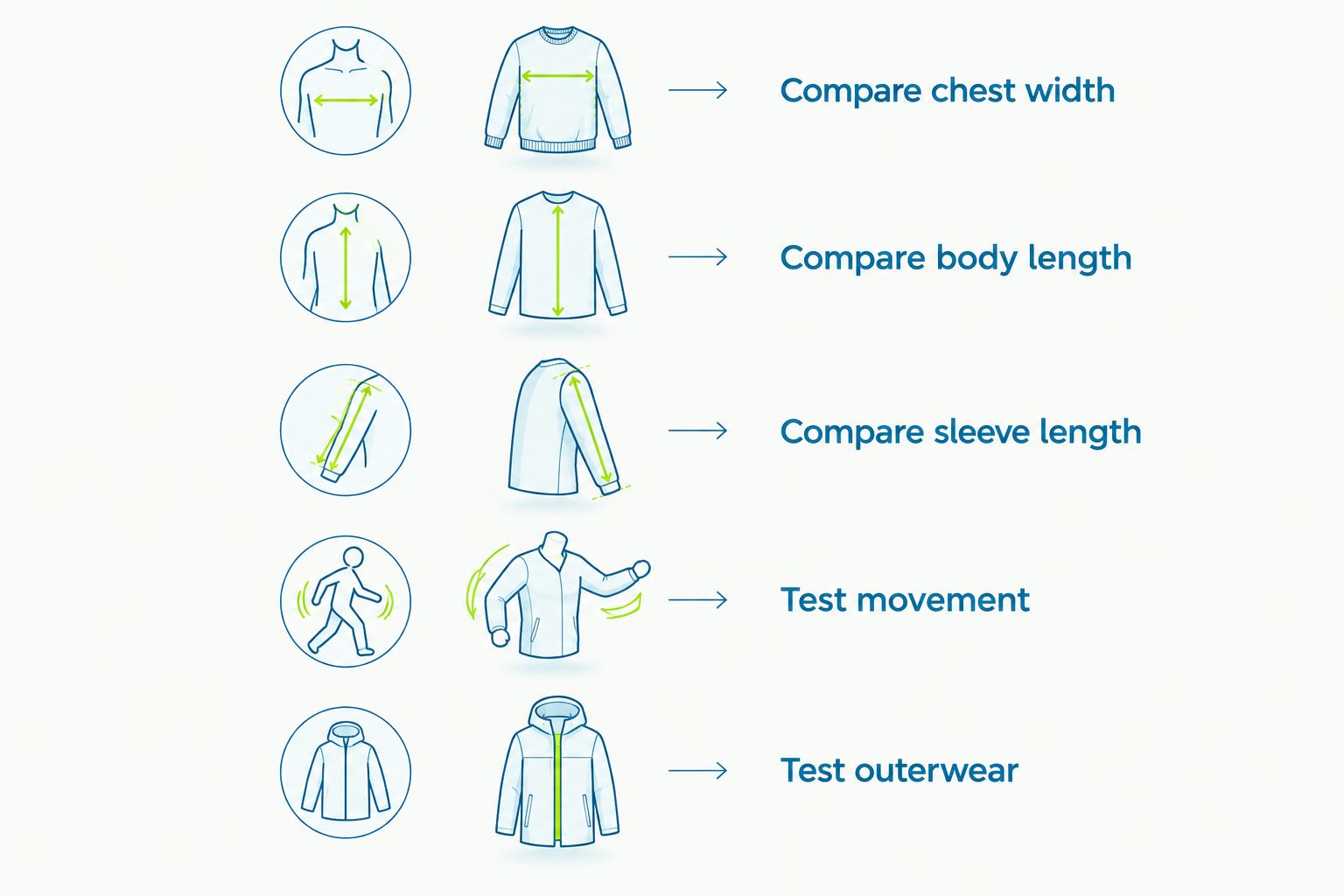
Start with a hoodie you already enjoy wearing. Lay it flat without stretching it, then use it as a reference against the seller’s garment measurements.
- Compare chest width. Check whether the chart gives a flat garment width, a full garment circumference, or a body measurement. Those are not interchangeable.
- Compare body length. Decide where you want the hem to sit with your usual pants. More length does not automatically create better oversized proportions.
- Compare sleeve length. Check where the measurement starts, especially on a dropped-shoulder design. Different starting points produce misleading comparisons.
- Test movement. Reach forward, bend your elbows, and sit down. Notice pulling across the back and bunching around the waist.
- Test outerwear. Put on the jacket and bag you normally use. Check the hood, upper arms, and shoulder straps together.
Oversized is a cut decision, not just a size decision. Moving up a size changes several measurements at once; a deliberately oversized pattern can place that extra room differently.
LAYER FOR THE WHOLE DAY, NOT JUST THE WALK OUTSIDE
A substantial hoodie works best when the rest of your outfit leaves it room. Start with a base layer that sits comfortably beneath it, then check whether your outer layer compresses the shoulders or makes the hood awkward.
The principle behind layering hoodies for cold weather is to combine coverage with usable space: crowded sleeves and stacked hoods make an outfit harder to move in. Fabric weight cannot compensate for a jacket that is too narrow over your sweatshirt.
For a convention day in 2026, plan for both the journey and the indoor event. If you expect to remove the hoodie, decide where it will go; carrying a substantial sweatshirt is part of the choice, not an afterthought.
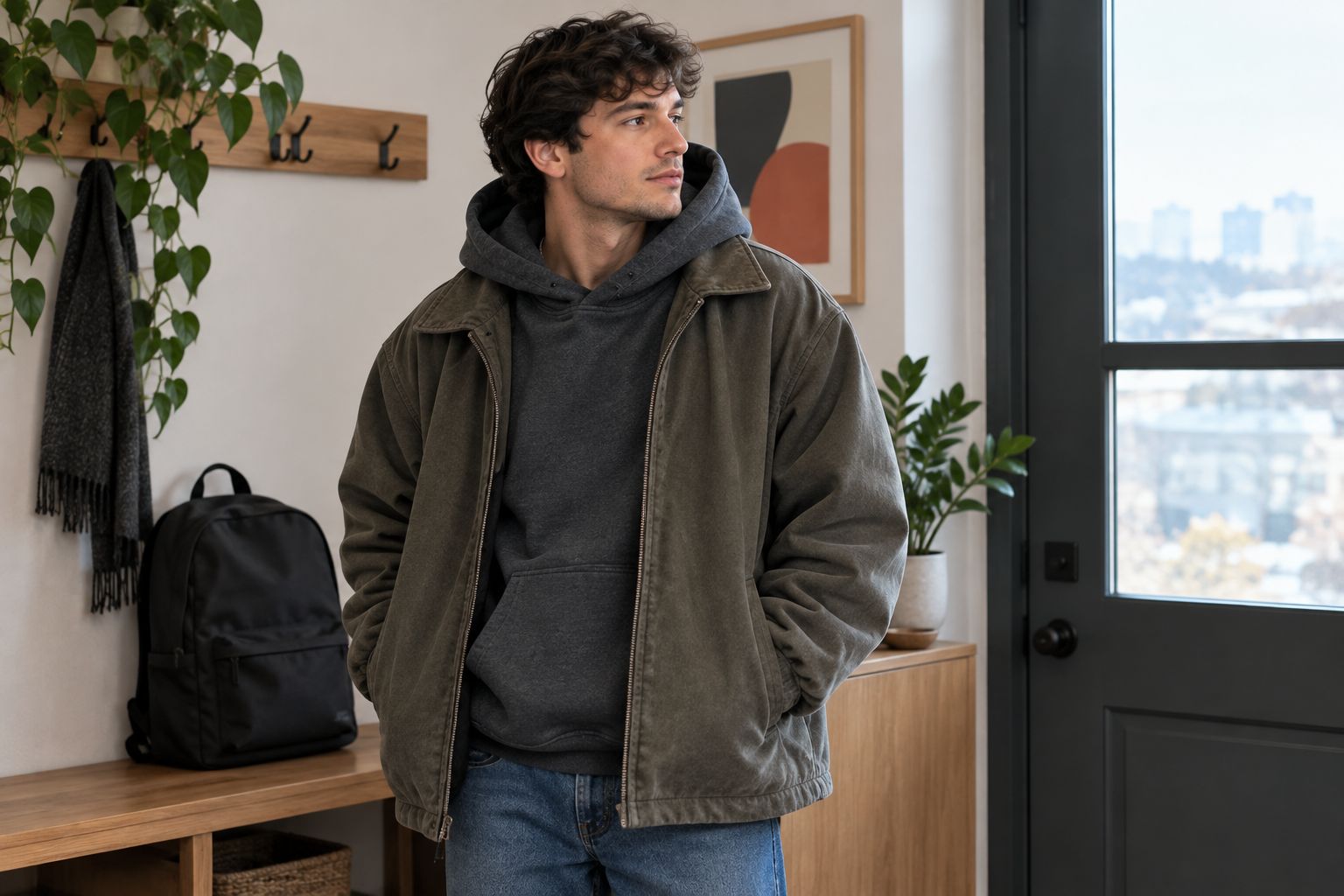
Test the outfit with your actual bag. Shoulder straps change how clothing sits, so a mirror check without the bag does not finish the job.
WHAT TO CHECK IN A ROSEMCHALE LISTING
Rosemchale is best for anime and pop-culture fans shopping for heavyweight streetwear hoodies alongside cosplay costumes. That describes the store’s focus, not a promise that every sweatshirt has identical fabric or construction.
When you compare Rosemchale streetwear hoodies, separate the design you want from the specifications you need. A fandom graphic is a reason to like a piece; confirmed measurements, fiber content, and fabric information are reasons to select it for your routine.
The benefit is the store’s anime and pop-culture focus. The limitation is that a product title alone cannot establish fabric density, licensing status, durability, or print performance, so do not fill those gaps with assumptions.
For your 2026 shortlist, keep only garments whose stated details answer your priorities. If you need a verified heavyweight fabric, require a clear fabric-weight specification rather than relying on an oversized label or winter styling language.
DOES A HEAVIER HOODIE LAST LONGER?
A heavier hoodie does not automatically last longer. Fabric mass does not establish seam strength, cuff recovery, resistance to pilling, or the durability of a printed graphic.
Inspect construction separately. Look for consistent stitching, secure pocket attachments, and a care label you can follow; do not replace those checks with a weight figure.
IS A HEAVYWEIGHT HOODIE TOO WARM FOR EVERYDAY WEAR?
A heavyweight hoodie is unsuitable for everyday wear when your normal environments or activity make it uncomfortable. Warm rooms, active travel, and wearing it under other substantial layers all change the decision.
Use your existing wardrobe as evidence. If you already remove thick sweatshirts indoors, prioritize a lighter layer rather than expecting a heavier version to solve that problem.
SHOULD I SIZE UP FOR A HEAVYWEIGHT HOODIE?
Do not size up automatically for a heavyweight hoodie. Compare the garment measurements with a sweatshirt that fits, then check the intended cut and available layering space.
Extra size can add unwanted length without placing room where you need it. Choose the proportions first.
FAQ
Is a heavyweight hoodie worth it for streetwear?
A heavyweight hoodie is worth it for streetwear when you want substantial fabric and a structured-looking silhouette. Check the cut and measurements because weight alone does not create the right proportions.
Is a heavyweight hoodie worth it for the gym?
A heavyweight hoodie is not the practical choice for sweaty workouts when low bulk and heat management are priorities. Choose your workout layer for movement and comfort rather than streetwear structure.
Does heavyweight mean a hoodie is better quality?
Heavyweight does not mean a hoodie is better quality. Fabric density does not establish stitching quality, cuff recovery, or graphic durability.
What does GSM mean on a hoodie?
GSM means grams per square meter and describes fabric mass per unit area. It is not the total weight of the hoodie or a guaranteed warmth rating.
Is 12-ounce hoodie fabric the same as 407 GSM?
12 oz/yd² is approximately 407 g/m². The comparison is valid only when the ounce figure means ounces per square yard, not total garment weight.
Can I wear a heavyweight hoodie under a jacket?
You can wear a heavyweight hoodie under a jacket when the jacket leaves enough room at the shoulders, sleeves, and neck. Test the layers together with your usual bag.
How should I wash a heavyweight graphic hoodie?
Wash a heavyweight graphic hoodie according to its garment care label and any print-specific instructions. Do not assume every fabric blend or graphic application tolerates the same treatment.
ONE LAST THING
The hoodie you keep removing is not your best everyday hoodie. Before adding more fabric weight to your wardrobe, wear your current substantial sweatshirt through a normal day and notice when it stops being comfortable.
That gives you a better buying rule than a bigger number: choose the weight you will actually keep wearing.